-

ASIC’s latest enforcement action is a timely reminder that “boring” compliance, lodging accounts on time and maintaining the right officeholders, isn’t optional. On 1 April 2026, ASIC reported that three public companies were fined a combined $1.17 million in a single day at the Downing Centre Local Court for failing to meet core public-company obligations.…
-
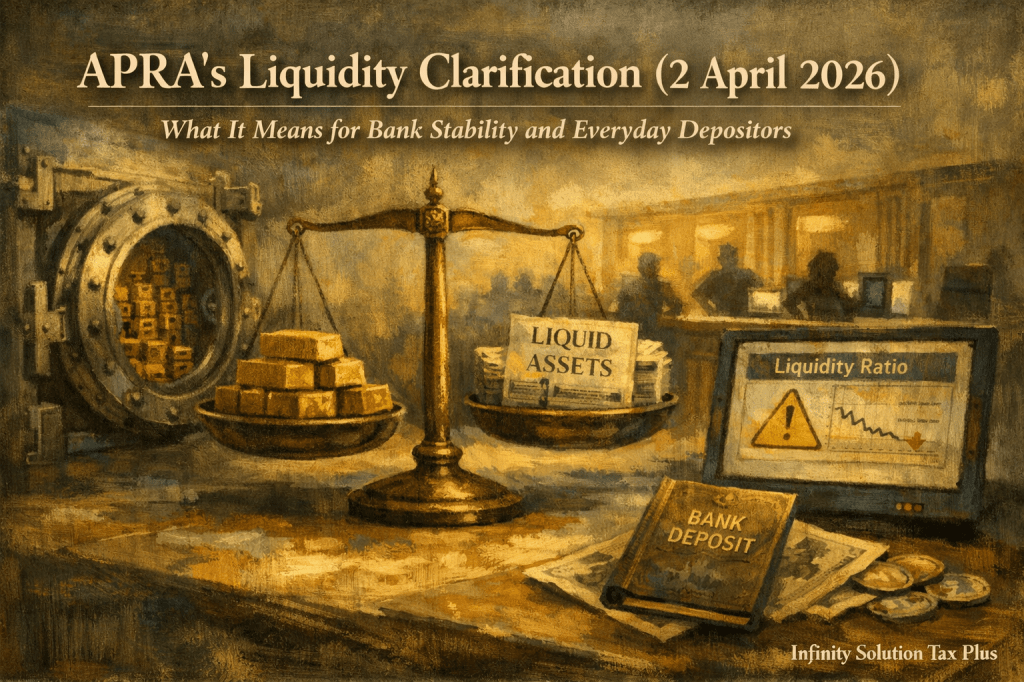
APRA has issued guidance aimed at tightening consistency in how some smaller banks and mutuals measure “liquidity”, the pool of assets a bank can quickly access to meet withdrawals and payment obligations. The change comes via an industry letter released on 2 April 2026, focused on how Minimum Liquidity Holdings (MLH) banks treat deposits they…
-

The temporary fuel excise reduction that began on 1 April 2026 is designed to ease immediate cost-of-living pressure, with the ACCC publicly stating it expects the cut to be passed on to motorists as quickly as possible. For households watching every weekly expense line, that pass-through speed (and whether prices “stick”) matters just as much…
-
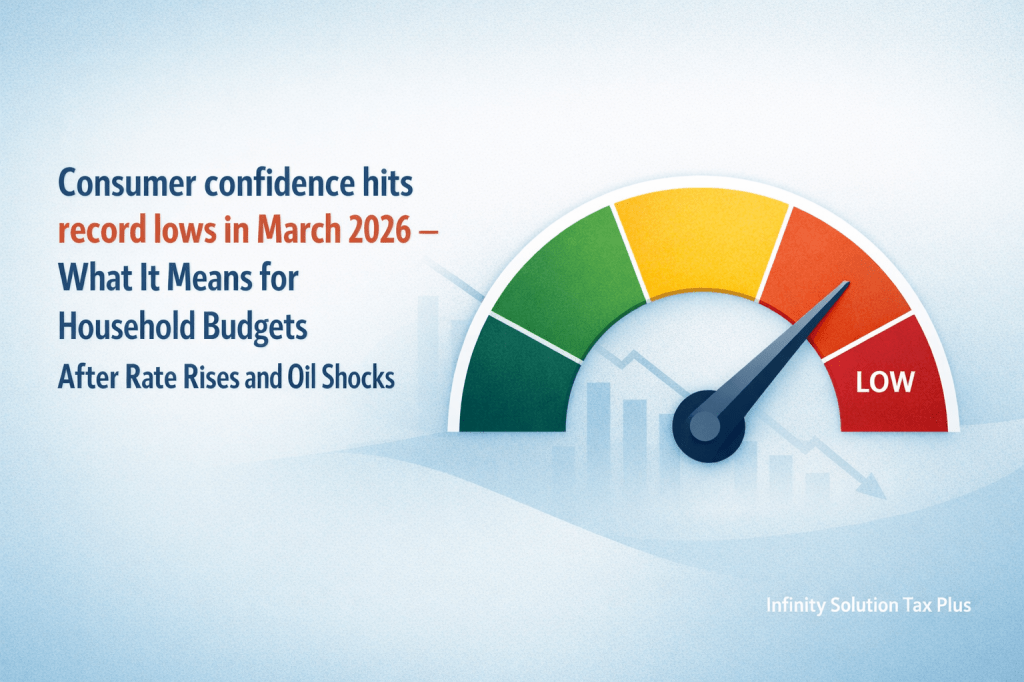
Australians are reporting some of the weakest consumer sentiment levels seen in decades, with ANZ-Roy Morgan figures (as reported this week) pointing to a reading around 63.1 — among the lowest levels recorded since the series began in 1973. When confidence falls this far, it tends to show up in everyday decisions: delaying big purchases,…
-

Australia’s capital gains tax (CGT) framework is back under scrutiny following the release of a Senate inquiry report into the CGT discount in March 2026. The inquiry examined how the current system operates and whether it may be influencing housing affordability and investment behaviour. The findings arrive at a time of heightened cost-of-living pressures and…
-

The Reserve Bank increased the cash rate to 3.85% in February 2026, citing inflation risks that remain under close watch. With households already feeling higher borrowing costs, recent reporting has highlighted renewed anxiety about further rate rises — including commentary about a possible move to 4.1%. No one can predict the exact path of interest…
-
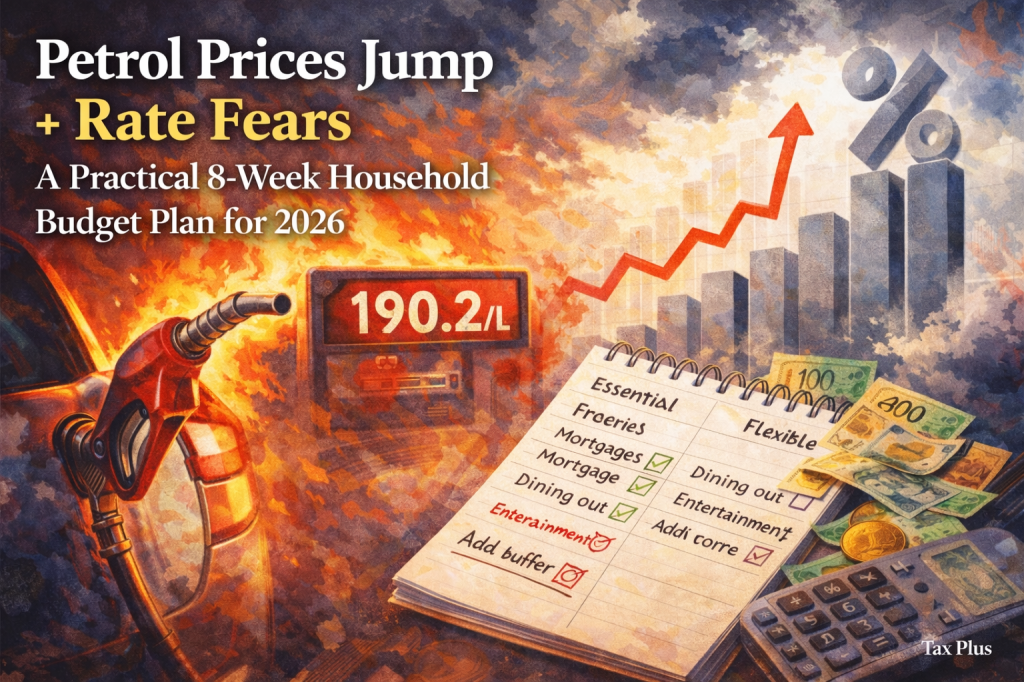
Rising petrol prices and renewed interest rate uncertainty have dented household confidence, with media describing a “double hit” for Australian families. The Reserve Bank set the cash rate at 3.85% in February 2026 and emphasised that inflation risks remain under close watch. At the same time, global tensions and oil price volatility are contributing to…
-

Recent commentary suggests that for some Australians, the benefit of earlier tax cuts can feel smaller over time as incomes rise — a phenomenon commonly referred to as “bracket creep”. Bracket creep describes what happens when income growth causes people to pay a higher average rate of tax over time, particularly when tax thresholds don’t…
-

Recent reporting indicates Treasury has modelled changes to Australia’s capital gains tax (CGT) discount, including reducing the current 50% discount for individuals or potentially replacing it with a flat-tax alternative design. While no legislative change has been enacted, the discussion is significant. CGT settings directly affect after-tax returns on shares, investment properties, and other assets.…
-

The Australian Bureau of Statistics (ABS) has reported updated Government Finance Statistics for the December 2025 quarter, showing movements in taxation revenue and the general government net operating balance. These figures form part of the official fiscal dataset that feeds into broader budget reporting and policy settings, as reflected in the Commonwealth’s Budget 2025–26 documentation.…
- Capital Gains Tax
- Cash Rate
- Climate Change
- Consumer Price Index
- cost of living
- Economy
- Finance
- General
- Global Economy
- Investment
- Labour Force
- Policy
- Property Development
- Superannuation
- Tax
- Tax Reform
- Tax Return
- Trust
- Vacant Residential Land Tax
Sienna Jiang is the Founder and Managing Director of Infinity Solution Tax Plus, a Chartered Accounting firm dedicated to helping clients stay financially organised while achieving their business, financial, and personal goals.
A Certified Public Accountant (CPA) with over 10 years of experience in accounting and taxation, Sienna brings broad and in-depth expertise in tax compliance, business advisory, financial reporting, and strategic tax planning for individuals and small businesses — including significant experience working with professionals in the medical field.
She works closely with clients to deliver tailored solutions in tax structuring, business strategy, and long-term planning. Her holistic approach combines practical guidance with personalised support, helping clients simplify compliance, drive growth, and reach their goals with confidence.