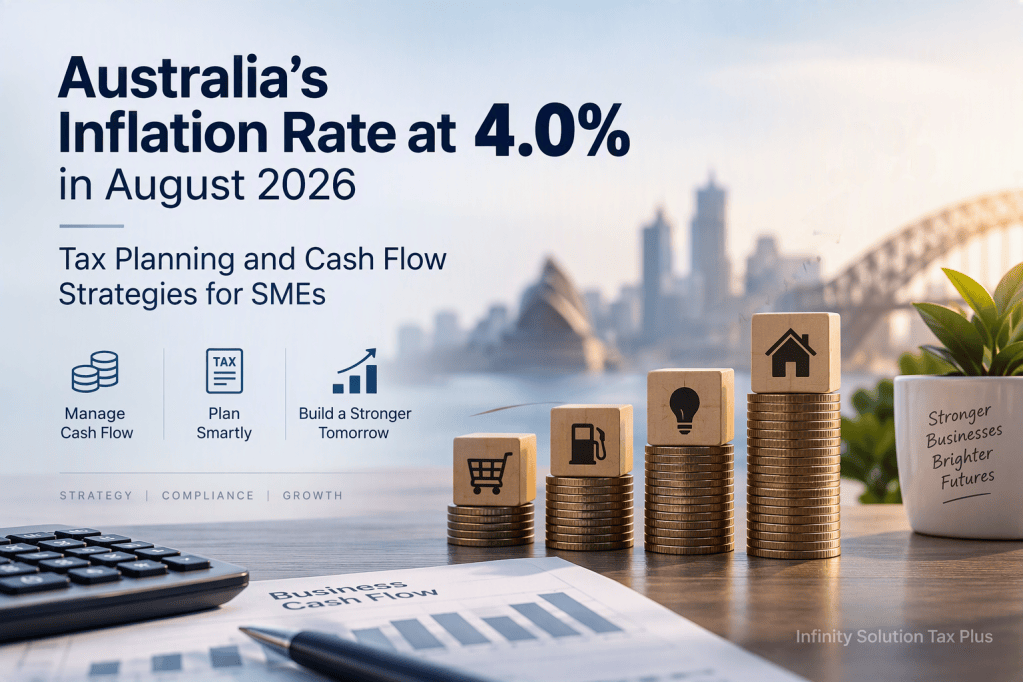
Australia’s inflationary pressures continue to challenge small and medium-sized enterprises (SMEs). The Australian Bureau of Statistics (ABS) reported annual consumer price inflation of 4.0% for August 2026, remaining above the Reserve Bank of Australia’s (RBA) target range of 2–3%. Rising operating costs, wage pressures and financing expenses are making financial management increasingly important for Australian businesses. Australian Bureau of Statistics
For business owners seeking support from an accountant Box Hill, understanding how inflation affects profitability, tax obligations and working capital is essential to maintaining financial stability.
Inflation Continues to Pressure Business Costs
Persistent inflation affects businesses through higher supplier prices, employee expenses, insurance premiums and operating overheads. SMEs operating with narrow profit margins may find it difficult to pass these additional costs on to customers without affecting demand.
Meanwhile, borrowing costs remain an important consideration for businesses relying on overdrafts, commercial loans or equipment finance. The RBA’s monetary policy decisions continue to reflect the need to balance inflation control with sustainable economic growth. Reserve Bank of Australia
Cash Flow Management: A Priority for SMEs
Strong cash flow management is particularly important when business expenses increase faster than revenue.
SMEs should consider several practical measures:
- Update cash flow forecasts: Prepare rolling forecasts covering the next three to six months.
- Review pricing and margins: Assess whether current prices adequately reflect higher operating costs.
- Improve debtor collections: Monitor overdue invoices and establish clear payment terms.
- Manage inventory carefully: Avoid excessive stockholding that unnecessarily ties up working capital.
- Review financing arrangements: Assess loan repayments, interest expenses and available working capital facilities.
Regular financial reviews can help business owners identify potential cash shortages before they become serious operational problems.
Tax Planning Opportunities in an Inflationary Environment
Effective tax planning can support cash flow while helping businesses meet their compliance obligations.
Working with a qualified Box Hill accountant can help SMEs assess several areas:
- Depreciation and asset purchases: Review available deductions and applicable depreciation rules before committing to major investments.
- Business expense deductions: Ensure eligible operating expenses are correctly recorded and claimed.
- Superannuation obligations: Budget for compulsory employer contributions and relevant payment deadlines.
- GST and BAS compliance: Maintain accurate reporting and sufficient cash reserves for upcoming liabilities.
- Business structure reviews: Evaluate whether existing arrangements remain appropriate for operational and taxation needs.
Importantly, purchasing assets or bringing forward expenses solely to obtain tax deductions may not improve overall cash flow. Any strategy should reflect genuine business requirements and current ATO rules. Australian Taxation Office
Implications for Business Owners and Investors
Businesses with variable-rate borrowings, substantial inventory requirements or significant payroll commitments may be particularly exposed to inflation-related pressures.
Property investors should also review borrowing costs, rental income, deductible expenses and repayment capacity. Interest deductibility depends on how borrowed funds are used, rather than simply on the property or asset securing the loan.
For both SMEs and investors, maintaining reliable financial records and reviewing financing arrangements can support better decisions during uncertain economic conditions.
How Infinity Solution Tax Plus Can Help
At Infinity Solution Tax Plus, we support SMEs, business owners and investors with practical tax planning, accounting compliance and financial management guidance.
As a trusted accountant in Box Hill, our focus is on helping clients understand their tax obligations, improve cash flow visibility and make informed business decisions as economic conditions evolve.
Final Thoughts
Australia’s August 2026 inflation reading of 4.0% highlights the importance of maintaining financial discipline despite inflation having eased from earlier peaks.
With future inflation releases and RBA policy decisions likely to influence operating and financing costs, SMEs should prioritise regular financial reviews, accurate tax reporting and forward-looking cash flow planning.
Disclaimer: This article contains general information only and does not constitute financial or taxation advice. You should seek personalised advice from a registered tax or financial professional.