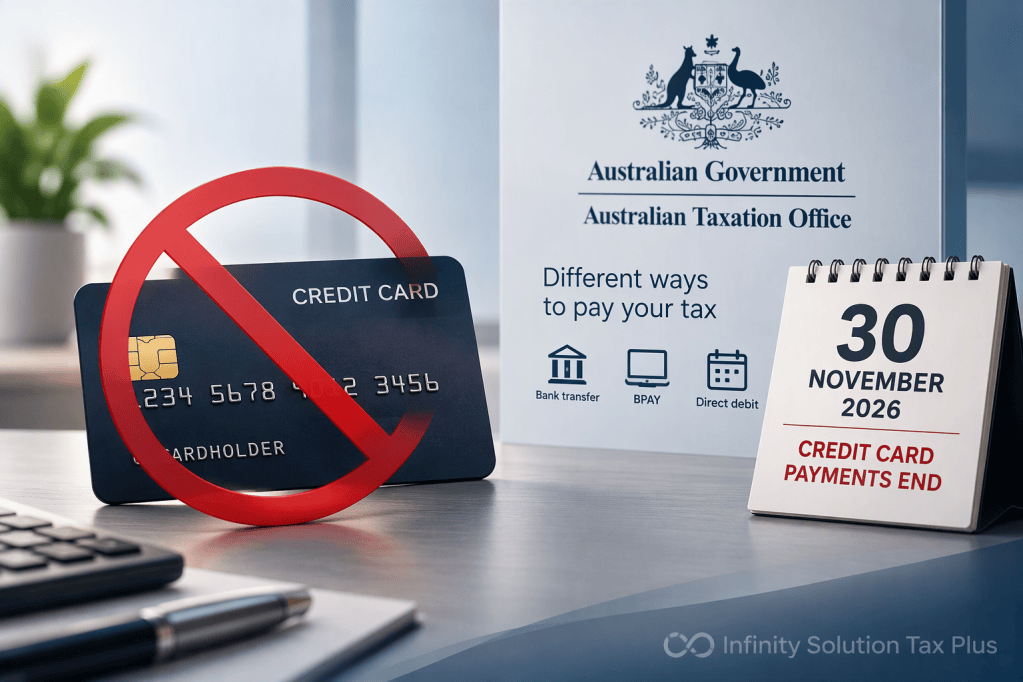
Australian businesses that use credit cards to pay tax liabilities will need to change their payment arrangements before the end of November. The Australian Taxation Office (ATO) has announced that it will stop accepting credit card payments after 30 November 2026, requiring affected taxpayers to move to alternative payment methods.
The change is particularly relevant for businesses that use credit cards to manage the timing of GST, PAYG withholding, income tax and other ATO obligations. For businesses working with an accountant Box Hill, the coming deadline provides an opportunity to review not only payment methods but also cash-flow forecasts and tax provisioning before the change takes effect. ATO
Why Is the ATO Stopping Credit Card Payments?
The ATO’s decision comes amid significant changes to Australia’s card payment system. Following its Review of Merchant Card Payment Costs and Surcharging, the Reserve Bank of Australia (RBA) concluded that card surcharging should end across designated eftpos, Mastercard and Visa networks from 1 October 2026. The reforms also reduce certain interchange fee caps and introduce greater transparency around merchant payment costs. RBA
The ATO’s credit card deadline is separate and later: taxpayers can continue using eligible credit card payment arrangements with the ATO until 30 November 2026, after which affected businesses will need another way to meet their liabilities. Businesses should therefore avoid confusing the RBA’s 1 October surcharge changes with the ATO’s 30 November credit card deadline. ATO
What Does the Change Mean for Businesses?
For businesses that currently use credit cards as a short-term cash-flow tool, the practical impact could be significant. Credit facilities can help bridge the gap between the date a tax liability falls due and the date customer payments are received.
Once credit card payments are no longer available, affected businesses may need to restructure how they fund and schedule tax payments. This is especially important for businesses with seasonal revenue, irregular debtor collections or limited working-capital buffers.
Businesses should review:
- whether existing ATO payments are made by credit card;
- whether scheduled payments or payment plans depend on credit card arrangements;
- upcoming BAS, PAYG and income tax obligations;
- cash reserves available to meet future tax liabilities; and
- whether alternative payment or financing arrangements need to be established.
Businesses already experiencing difficulty meeting tax obligations should address the issue early rather than waiting until a liability becomes overdue.
Cash-Flow Planning Becomes More Important
The removal of credit card payments does not change the underlying tax liability or its due date. What changes is one source of short-term funding that some businesses have traditionally used to meet those liabilities.
This makes forward tax provisioning increasingly important. A Box Hill accountant can help businesses forecast expected BAS and income tax commitments, identify potential cash-flow gaps and establish processes for setting aside tax throughout the year.
The objective should be to ensure that a payment-method change does not become a compliance or working-capital problem.
What Businesses Should Do Before 30 November 2026
Businesses should identify any reliance on credit cards for ATO payments well before the deadline and establish an alternative payment process. Internal accounting procedures, authorisations and scheduled payments should also be reviewed so that the transition does not result in an accidental missed payment.
This is also a useful time to stress-test cash-flow forecasts. Businesses that have historically depended on credit cards close to BAS or tax due dates may need to reconsider their working-capital arrangements or build larger tax reserves.
Infinity Solution Tax Plus can assist businesses in reviewing tax obligations, cash-flow forecasts and payment processes ahead of the transition. Working with a trusted accountant in Box Hill can help ensure upcoming liabilities are identified early, and appropriate arrangements are considered before deadlines arise.
Final Thoughts
The ATO’s decision to stop accepting credit cards after 30 November 2026 is more than an administrative payment change for businesses that regularly use credit to manage tax obligations. It may require changes to cash-flow planning, internal payment procedures and the way tax liabilities are funded.
With the deadline approaching, businesses should review their arrangements now rather than waiting until their next payment falls due. Early preparation provides more time to identify cash-flow pressures, establish alternative payment methods and minimise the risk of disruption or missed tax obligations.
The broader payments environment is also continuing to evolve. The RBA’s 2026 reforms are being implemented in stages, with additional interchange fee and payment-cost transparency measures taking effect into 2027. Businesses should therefore continue monitoring both ATO payment requirements and developments in Australia’s payment system. RBA
Disclaimer: This article contains general information only and does not constitute financial or taxation advice. You should seek personalised advice from a registered tax or financial professional.