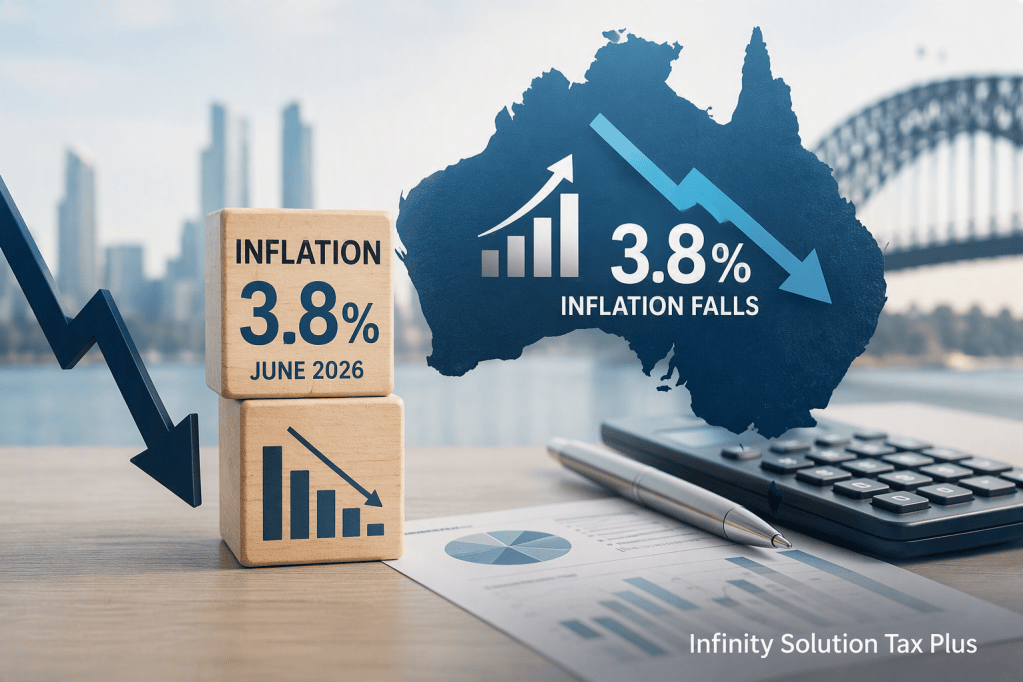
Australia’s latest inflation figures have provided welcome news for households and businesses, with annual Consumer Price Index (CPI) growth easing to 3.8% in the year to June 2026. While inflation remains above the Reserve Bank of Australia’s (RBA) target range, the latest data suggests price pressures are continuing to moderate compared with previous peaks. For many Australians, the key question is what this means for living costs, mortgage repayments, business conditions and the future direction of interest rates. [ABS June CPI] A trusted accountant Box Hill brings you our latest analysis on this key data.
Inflation Is Moving in the Right Direction
The latest CPI data indicates that Australia’s inflation challenge is gradually easing. Falling energy prices, slower growth in goods prices and improvements in global supply chains have helped reduce overall inflationary pressure. However, some sectors continue to experience elevated cost increases, particularly housing, insurance, healthcare and selected services.
While a headline inflation rate of 3.8% is significantly lower than the highs seen during the inflation surge of recent years, it still exceeds the RBA’s target band of 2% to 3%. As a result, policymakers are likely to remain cautious before declaring victory over inflation.
For households, slowing inflation does not mean prices are falling. Instead, it means prices are rising more slowly than before. Many families continue to feel pressure from higher costs accumulated over previous years, particularly on essentials such as housing, groceries and utilities.
What Could This Mean for Interest Rates?
The inflation result is likely to play a major role in shaping expectations ahead of upcoming RBA monetary policy meetings. The central bank has consistently stated that inflation must return sustainably to its target range before policymakers can be confident about easing monetary settings.
A moderation in inflation improves the likelihood that interest rates may remain on hold rather than facing further increases. Financial markets and economists will now carefully analyse underlying inflation measures, including trimmed mean inflation, labour market conditions and consumer spending patterns before making predictions about future rate movements.
For mortgage holders, this development may provide cautious optimism. Although there is no guarantee of future rate cuts, easing inflation reduces pressure on the RBA to tighten policy further, potentially providing relief for borrowers if the disinflation trend continues. Equally, this could also mean that interest rates could be on hold for a longer period of time, but still better than possible rate hikes.
Implications for Small Business Owners
Small and medium-sized enterprises continue to face a complex operating environment. While moderating inflation may reduce some input cost pressures, businesses are still dealing with higher wage expenses, insurance premiums, rent increases and financing costs.
Business owners should avoid assuming that inflation concerns have disappeared. Instead, they should continue reviewing pricing strategies, managing cash flow carefully, and monitoring interest rate developments. Forward budgeting and cash flow forecasting remain critical, particularly for businesses operating on tight margins.
At Infinity Solution Tax Plus, we are seeing many business clients reassess budgets and growth plans as economic conditions evolve. Strategic financial planning remains essential during periods of economic transition.
For businesses seeking guidance from an experienced Box Hill accountant, understanding the relationship between inflation, financing costs and profitability can provide a significant competitive advantage.
What Households Should Watch Next
In the coming months, Australians should closely monitor three key indicators:
- Future CPI inflation releases.
- RBA interest rate decisions.
- Labour market and wage growth trends.
These indicators will help determine whether inflation continues moving towards the RBA target range and whether conditions eventually support lower borrowing costs.
Homeowners, investors and business operators should avoid making major financial decisions based solely on a single inflation report. Economic trends are assessed over time, and policymakers will be looking for sustained evidence that inflation is under control.
Conclusion
The June 2026 inflation result of 3.8% is an encouraging sign that Australia’s inflation pressures are gradually easing. While this may reduce pressure for further interest rate increases, inflation remains above the RBA’s target range and economic uncertainty persists. Both households and businesses should remain proactive, carefully monitor economic developments and seek professional advice when making significant financial decisions.
Disclaimer
This article is general information only and does not constitute financial, taxation or investment advice. Information is based on publicly available economic data at the date of publication. Before making financial decisions, seek advice from a qualified professional regarding your individual circumstances.


 Infinity Solution Tax Plus