-
ATO Trust Reporting Reforms: More Time to Prepare Australia’s trust reporting framework is undergoing further modernisation, with the Australian Taxation Office (ATO) working to improve the accuracy, transparency and consistency of information reported by trustees and beneficiaries. The reported deferral of the next phase of the Modernisation of Tax Administration Systems (MTAS) program from Tax…
-
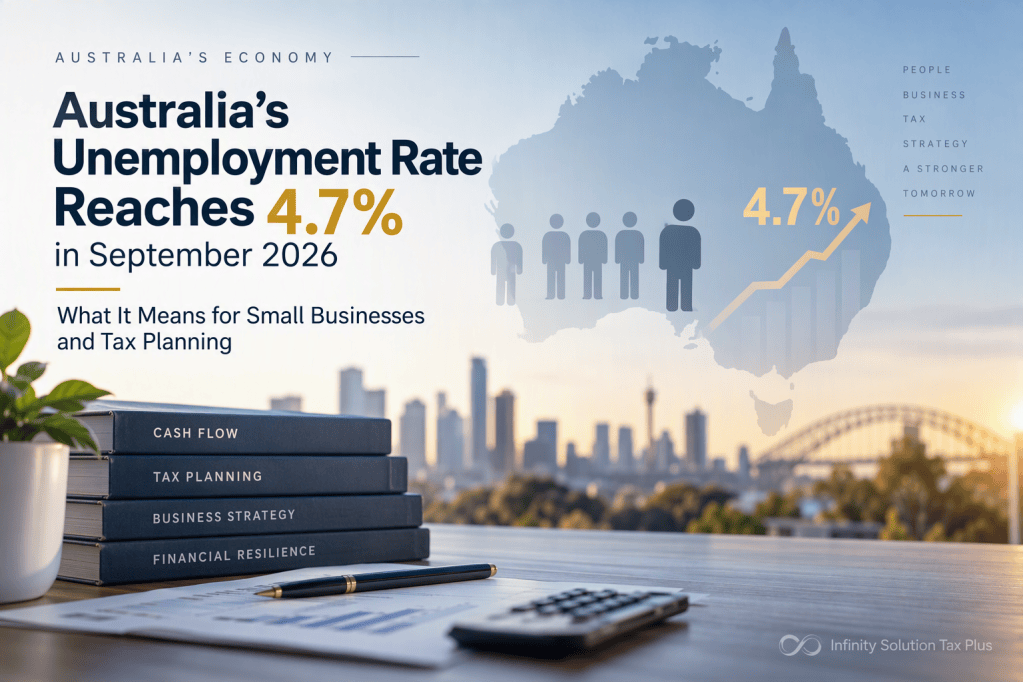
Australia’s Labour Market Shows Signs of Slowing Australia’s unemployment rate reached 4.7% in September 2026, highlighting emerging challenges for businesses and households. The Australian Bureau of Statistics (ABS) reported a decline of 39,300 employed people, while the number of unemployed Australians increased by approximately 8,900. The unemployment rate remained at 4.7% following an upward revision…
-

Australia’s sovereign credit rating has once again come into focus, with Fitch Ratings reaffirming the nation’s AAA status. The decision reinforces confidence in Australia’s financial institutions, fiscal framework and capacity to manage government debt despite ongoing global economic uncertainty. Australian Treasury For Australian businesses and investors, the rating provides an important indication of economic stability.…
-
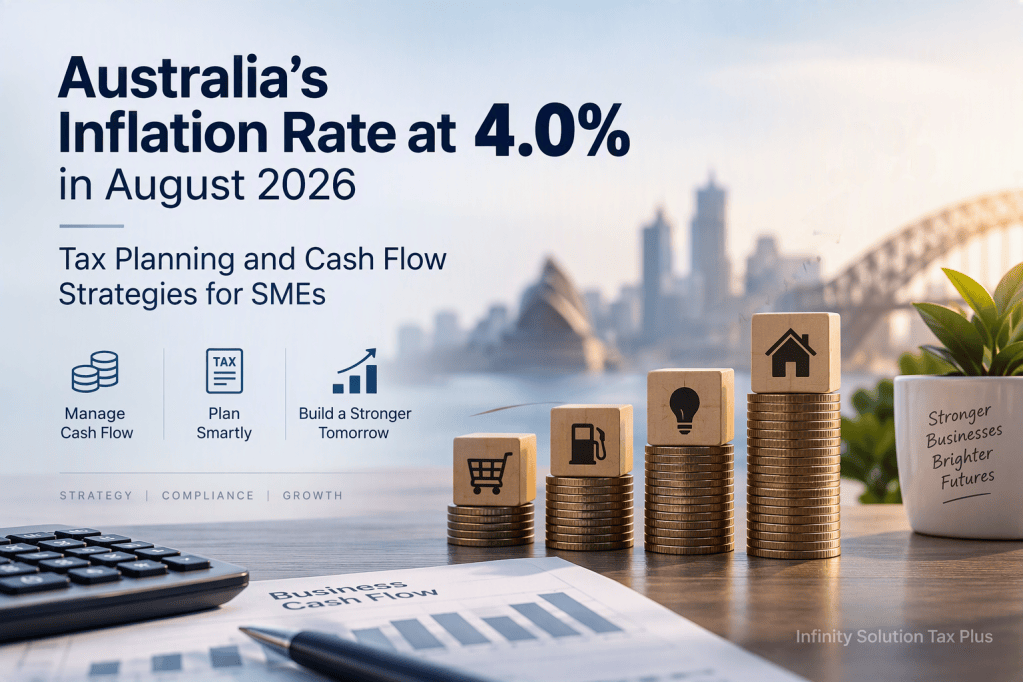
Australia’s inflationary pressures continue to challenge small and medium-sized enterprises (SMEs). The Australian Bureau of Statistics (ABS) reported annual consumer price inflation of 4.0% for August 2026, remaining above the Reserve Bank of Australia’s (RBA) target range of 2–3%. Rising operating costs, wage pressures and financing expenses are making financial management increasingly important for Australian…
-

Australia’s financial system remains resilient, but growing global uncertainty presents important challenges for businesses, investors and households. The Reserve Bank of Australia’s (RBA) 2026 Financial Stability Review highlights how international financial market vulnerabilities, geopolitical tensions and global economic developments could affect Australia’s financial stability. While high household debt, housing affordability and property market conditions remain…
-

Australian businesses that use credit cards to pay tax liabilities will need to change their payment arrangements before the end of November. The Australian Taxation Office (ATO) has announced that it will stop accepting credit card payments after 30 November 2026, requiring affected taxpayers to move to alternative payment methods. The change is particularly relevant…
-
Australian property investors remain firmly within the Australian Taxation Office’s compliance focus, with rental income, deductions and record-keeping all subject to increasingly sophisticated scrutiny. The ATO’s property-management data-matching program gives it access to information about rent and expenses for residential properties managed by property managers. It also draws on rental information from sources including banks,…
-

Australia’s venture capital tax framework could become significantly more accessible to growing businesses under exposure draft legislation released by Treasury in September 2026. The proposed reforms would increase key investment and fund thresholds applying to Venture Capital Limited Partnerships (VCLPs) and Early Stage Venture Capital Limited Partnerships (ESVCLPs). Announced as part of the 2026–27 Federal…
-
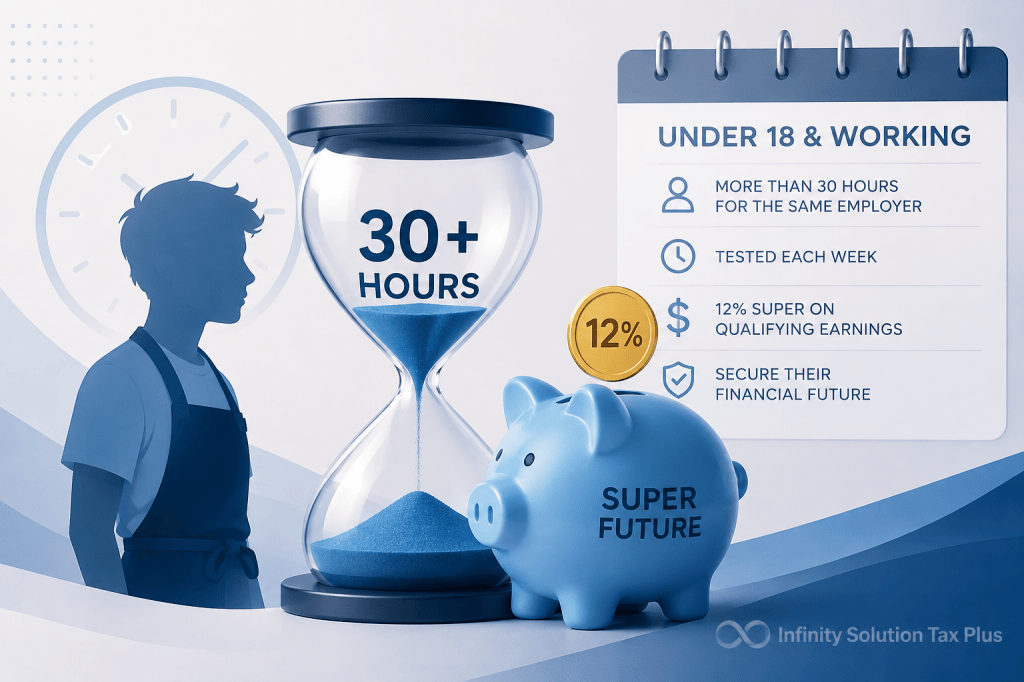
Australia’s superannuation rules treat most workers aged under 18 differently from adult employees. While workers aged 18 and over generally qualify for compulsory employer super regardless of their hours, an employee under 18 must currently work more than 30 hours in a week for the same employer before the super guarantee applies. The rule is…
-

The latest decision by the US Federal Reserve (Fed) has once again highlighted the delicate balance between controlling inflation and supporting economic growth. At its July 2026 meeting, the Federal Open Market Committee (FOMC) voted to keep interest rates unchanged at 3.50% to 3.75%, signalling that inflation remains a concern despite signs of economic resilience…
- Capital Gains Tax
- Cash Rate
- Climate Change
- Consumer Price Index
- cost of living
- Economy
- Finance
- General
- Global Economy
- Investment
- Labour Force
- Policy
- Property Development
- Superannuation
- Tax
- Tax Reform
- Tax Return
- Trust
- Vacant Residential Land Tax
Sienna Jiang is the Founder and Managing Director of Infinity Solution Tax Plus, a Chartered Accounting firm dedicated to helping clients stay financially organised while achieving their business, financial, and personal goals.
A Certified Public Accountant (CPA) with over 10 years of experience in accounting and taxation, Sienna brings broad and in-depth expertise in tax compliance, business advisory, financial reporting, and strategic tax planning for individuals and small businesses — including significant experience working with professionals in the medical field.
She works closely with clients to deliver tailored solutions in tax structuring, business strategy, and long-term planning. Her holistic approach combines practical guidance with personalised support, helping clients simplify compliance, drive growth, and reach their goals with confidence.

