-
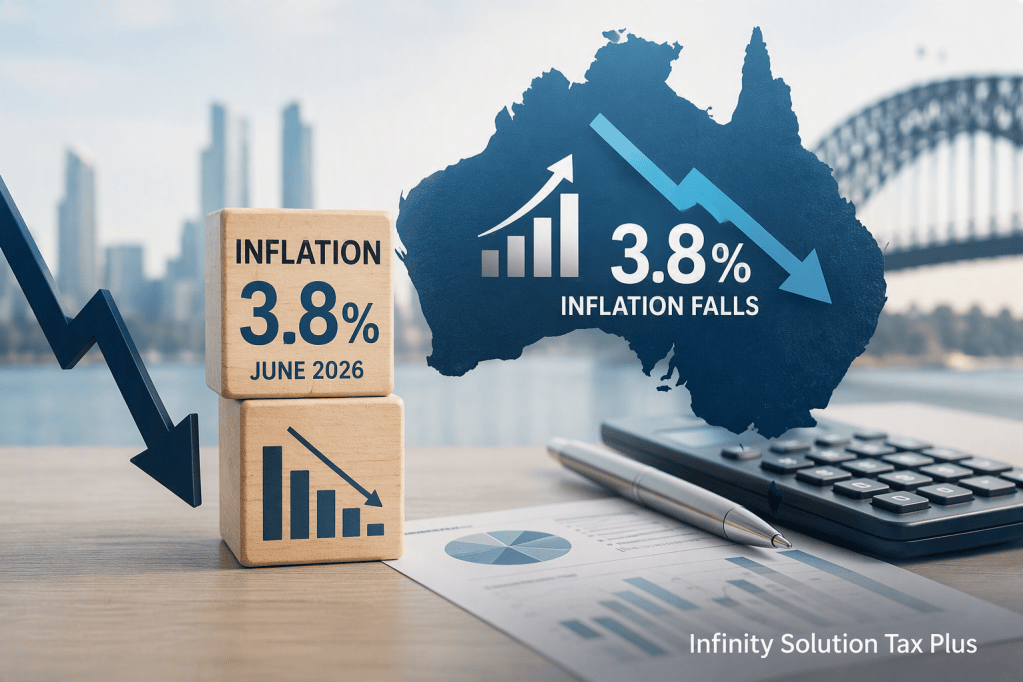
Australia’s latest inflation figures have provided welcome news for households and businesses, with annual Consumer Price Index (CPI) growth easing to 3.8% in the year to June 2026. While inflation remains above the Reserve Bank of Australia’s (RBA) target range, the latest data suggests price pressures are continuing to moderate compared with previous peaks. For…
-

As Tax Time 2026 gets underway, the Australian Taxation Office (ATO) has highlighted rental property claims as a key compliance focus, particularly where properties are used both as short-term holiday accommodation and for private purposes. The renewed attention comes as Australians increasingly generate income through holiday homes and online accommodation platforms, creating more complexity when…
-
Australia’s trust landscape is undergoing a meaningful shift following the latest updates from the Australian Taxation Office (ATO), released on 16 July 2026, particularly around how trustees report and manage tax file number (TFN) information and administrative obligations. These changes form part of broader reforms aimed at improving transparency, compliance, and system efficiency within Australia’s…
-
The 2026–27 financial year has introduced a significant, but often misunderstood, change to Australia’s income tax system — the reduction of the lowest marginal tax rate from 16% to 15%, effective 1 July 2026. This reform is part of the Federal Government’s ongoing effort to ease cost-of-living pressures and reduce bracket creep across the workforce.…
-
Australia’s capital gains tax (CGT) reform agenda has entered a critical phase, with June 2026 updates confirming a major shift for small and medium businesses. For business owners seeking guidance from an experienced accountant Box Hill, this change is particularly important — the Federal Government has lifted the turnover threshold for key small business CGT…
-
The Australian Taxation Office (ATO) has released its latest update ahead of Tax Time 2026, highlighting important changes to non-individual tax returns and schedules. These updates, published on 11 June 2026, directly impact companies, trusts, and partnerships, making it critical for businesses to prepare early. [ato.gov.au] For business owners and advisors—especially those working with a…
-

Australia’s residential housing stock is now valued at $12,772.6 billion (about $12.8 trillion) after a 2.5% rise in the March quarter 2026, based on the latest Australian Bureau of Statistics (ABS) Total Value of Dwellings release. For households and small investors engaging an accountant Box Hill, this macro update is more than trivia: it frames…
-
For small business owners in Box Hill and across Melbourne, today’s release of the ABS March‑quarter 2026 National Accounts is a timely reminder that EOFY tax planning now sits in a low‑growth, high‑cost environment. The Australian economy expanded by 0.3% in the March quarter, confirming modest growth rather than contraction — but also signalling subdued…
-
What the Latest RBA Decision Means for Melbourne Businesses and Borrowers Context: Why the May Minutes Matter The Reserve Bank of Australia’s May 2026 Monetary Policy Board minutes reaffirmed that the cash rate remains on hold at 4.35%, with the Board emphasising persistent inflation risks despite easing growth momentum. The RBA acknowledged that while demand…
-
Australia’s labour market has softened, with the Australian Bureau of Statistics (ABS) reporting that the national unemployment rate increased to 4.5% in April 2026. While this remains low by historical standards, the rise represents a clear change in momentum after an extended period of labour market tightness. For small and medium‑sized businesses, this shift has…
- Capital Gains Tax
- Cash Rate
- Climate Change
- Consumer Price Index
- cost of living
- Economy
- Finance
- General
- Global Economy
- Investment
- Labour Force
- Policy
- Property Development
- Superannuation
- Tax
- Tax Reform
- Tax Return
- Trust
- Vacant Residential Land Tax
Sienna Jiang is the Founder and Managing Director of Infinity Solution Tax Plus, a Chartered Accounting firm dedicated to helping clients stay financially organised while achieving their business, financial, and personal goals.
A Certified Public Accountant (CPA) with over 10 years of experience in accounting and taxation, Sienna brings broad and in-depth expertise in tax compliance, business advisory, financial reporting, and strategic tax planning for individuals and small businesses — including significant experience working with professionals in the medical field.
She works closely with clients to deliver tailored solutions in tax structuring, business strategy, and long-term planning. Her holistic approach combines practical guidance with personalised support, helping clients simplify compliance, drive growth, and reach their goals with confidence.