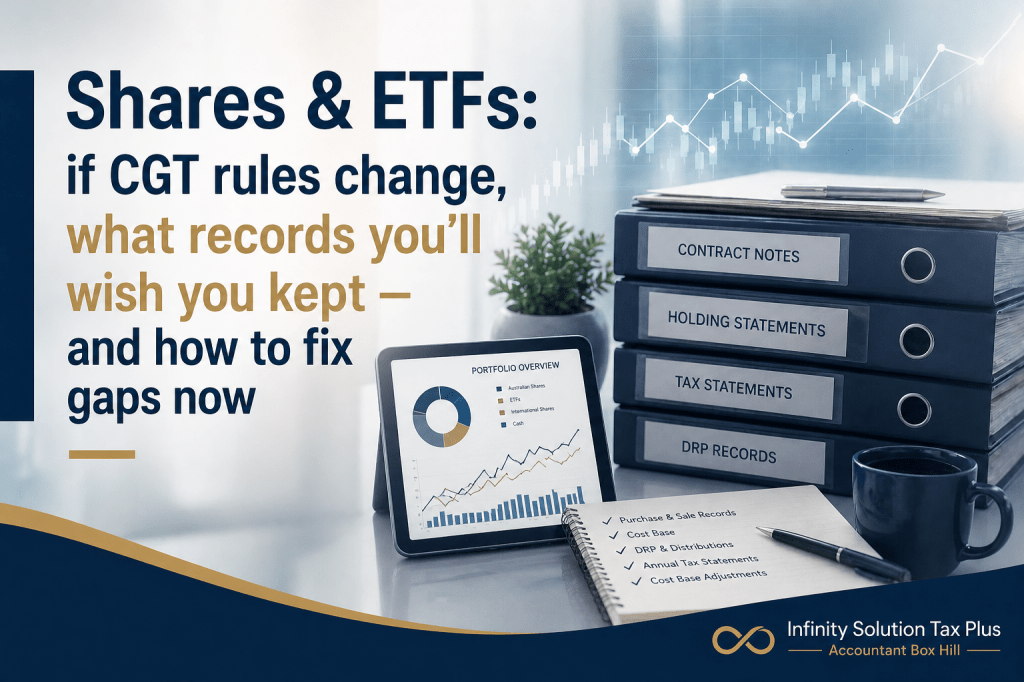
Capital gains tax is back in the spotlight, with discussion that a future reform could replace the current 50% CGT discount for new investments with an inflation-indexation model. For people who own shares and ETFs, that makes record-keeping more important than ever. Even though no law has changed yet, investors should treat this as a prompt to review their files now rather than when they are ready to sell.
For anyone speaking with an accountant Box Hill, the key issue is practical rather than political: if the tax rules become more detailed, what documents will you need to support the gain or loss on sale? Under current ATO guidance, investors already need records showing when shares or units were acquired, what they cost (including brokerage), and how later transactions and events affect the cost base.
Why does this matter if CGT rules change
At present, many investors focus mainly on whether they have held an asset for at least 12 months so they can access the CGT discount. If a future system instead taxes a gain after allowing for inflation, the calculation could depend much more heavily on exact purchase dates, parcel histories, reinvestments, and cost base adjustments over time. In that environment, incomplete records become more than an inconvenience — they can turn into a compliance risk, especially where you need to explain “which units you sold” and why the cost base is what you claim it is.
What records should you have for shares and ETFs
The ATO says records for shares and units often come from your stockbroker, share registry, company, or fund manager. In practice, that means investors should keep contract notes for every purchase and sale, CHESS or issuer-sponsored holding statements, and evidence of brokerage or other acquisition and disposal costs. For ETFs and managed funds, keep annual tax statements and distribution statements (because they can include components that affect CGT and cost base). If you participate in dividend reinvestment plans, those additional units also need to be tracked because they form new parcels and affect your overall cost base.
This becomes especially important where you have bought the same share or ETF in multiple parcels over time. Without proper documentation, it can be difficult to identify which parcel was sold, what its cost was, and what cost base adjustments applied to that parcel. That can directly change the gain (or loss) reported on your tax return.
The gaps investors often discover too late
The most common problems are missing contract notes after changing brokers, incomplete DRP histories (especially where reinvestments occurred over many years), forgotten annual tax statements for ETFs, and poor tracking of events that adjust cost base. Investors also sometimes assume their portfolio app or a broker’s “performance report” is enough, but the ATO expectation is that you can substantiate the CGT calculation itself — including dates, amounts, and the records behind any adjustments.
How to fix the problem now
The best time to fix missing records is before a sale happens. Start by downloading what you can from your broker and share registry, and by checking what’s available through ATO Online services in myGov (where applicable). The ATO also provides a capital gains tax record-keeping tool that can help you work out gains and losses and keep CGT asset and CGT event details together in one place.
If there are still gaps, rebuild the history investment by investment: acquisition date, number of units, purchase cost, brokerage, DRP parcels, annual tax statement data (including relevant components that affect cost base), and sale details. A Box Hill accountant can help test whether your records are sufficient, and whether your parcel selection and cost base treatment are consistent with ATO expectations before you lodge.
Final thoughts
If CGT rules do change, investors with clean records will be in a much stronger position to estimate tax outcomes, support their return, and avoid preventable errors. Even if the law stays the same, better documentation still reduces stress and improves accuracy at tax time. Infinity Solution Tax Plus can assist as a trusted accountant in Box Hill if you want to review your shares and ETFs before a future sale creates avoidable problems.
Disclaimer: This article contains general information only and does not constitute financial or taxation advice. You should seek personalised advice from a registered tax or financial professional.

 Infinity Solution Tax Plus