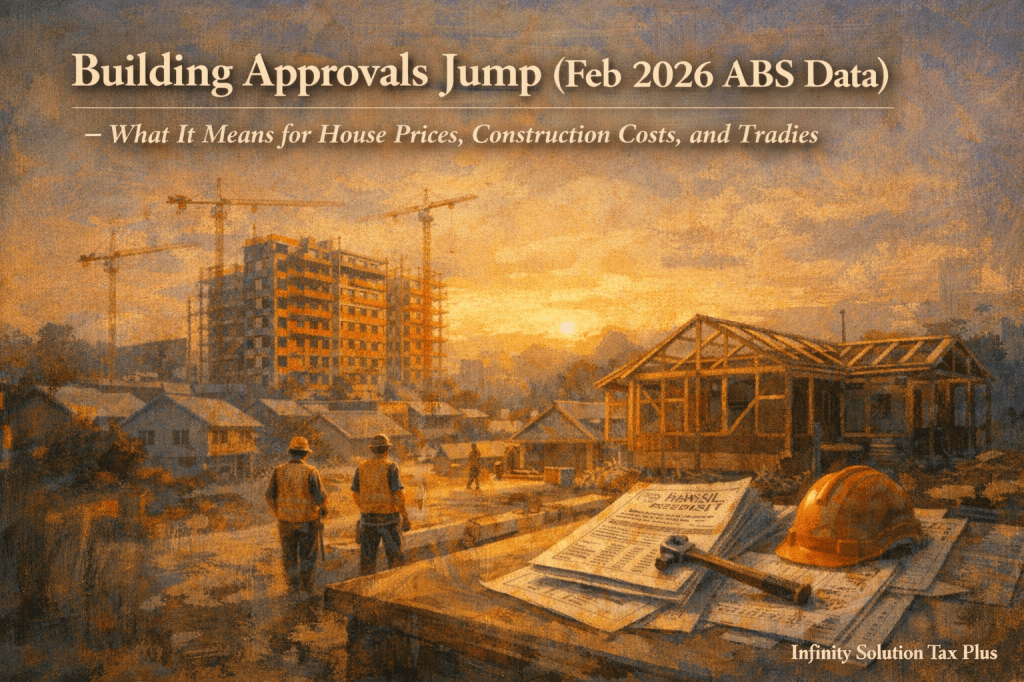
Australia’s latest building approvals data delivered a sharp monthly lift in February 2026, offsetting all the losses in Jan, driven overwhelmingly by private sector dwellings excluding houses (the ABS category that captures apartments and other higher-density dwellings). It’s the sort of headline that can sound like “problem solved” on housing supply—but approvals are only the start of the pipeline, and the flow-through to prices and costs depends on labour capacity, financing, and how quickly projects turn into completions.
For households and investors, the timing matters because approvals can influence expectations (and sentiment) well before any new homes are actually finished. From the perspective of an accountant Box Hill clients often want the practical read: will this ease housing pressure soon, or does it mainly signal higher construction activity and tradie demand?
What the ABS numbers actually say
The ABS reported that total dwellings approved rose 29.7% in February 2026 to 19,022 (seasonally adjusted). The detail is the story:
- Private sector dwellings excluding houses (typically apartments/townhouses) jumped 101.2% to 8,922
- Private sector houses were essentially flat, up 0.2% to 9,847
- The value of total residential building rose 30.8% to $12.50b
- The value of total non-residential building fell 4.4% to $7.93b
In summary, approvals surged, but mainly because higher-density projects rebounded strongly, while detached house approvals barely moved.
Why approvals don’t automatically mean cheaper housing
Approvals are a leading indicator, not a guarantee of near-term supply. Even when approvals rise, projects still need finance, builders, materials, and—crucially—labour. Where labour is tight, a burst of approvals can push up quotes and extend timelines before it meaningfully increases finished housing stock.
Construction costs and tradies: the pressure point
A lift in approvals can be “good news” for housing supply, but it can also amplify competition for skilled labour. Recent coverage of workforce constraints points to a sizeable gap in construction labour, with reports citing rising shortages and unfilled roles weighing on delivery capacity. Where this plays out most visibly is:
- Higher build quotes (labour premiums, longer lead times)
- Delayed start dates as builders ration capacity
- Variation risk rises as projects run longer than planned
If you’re budgeting a renovation or new build, a practical step is to stress-test the plan for time overruns and contingency. A Box Hill accountant can also help you map the cash-flow impact of staged payments, progress claims, and buffers—especially if you’re balancing construction costs with mortgage commitments.
Final thoughts
February’s approvals jump is a meaningful signal that the supply pipeline is trying to respond—particularly through higher-density housing. But the translation into affordability hinges on whether the industry can actually build at pace, and that depends heavily on labour availability and project feasibility through 2026. Keep an eye on upcoming ABS releases to see whether this momentum persists or proves lumpy month-to-month.
For households navigating these shifts, whether you’re buying, building, or renovating, getting your numbers clear early reduces unpleasant surprises. A trusted accountant in Box Hill can help you plan conservatively and stay on top of cash flow as the construction cycle evolves.
Disclaimer: This article contains general information only and does not constitute financial or taxation advice. You should seek personalised advice from a registered tax or financial professional.