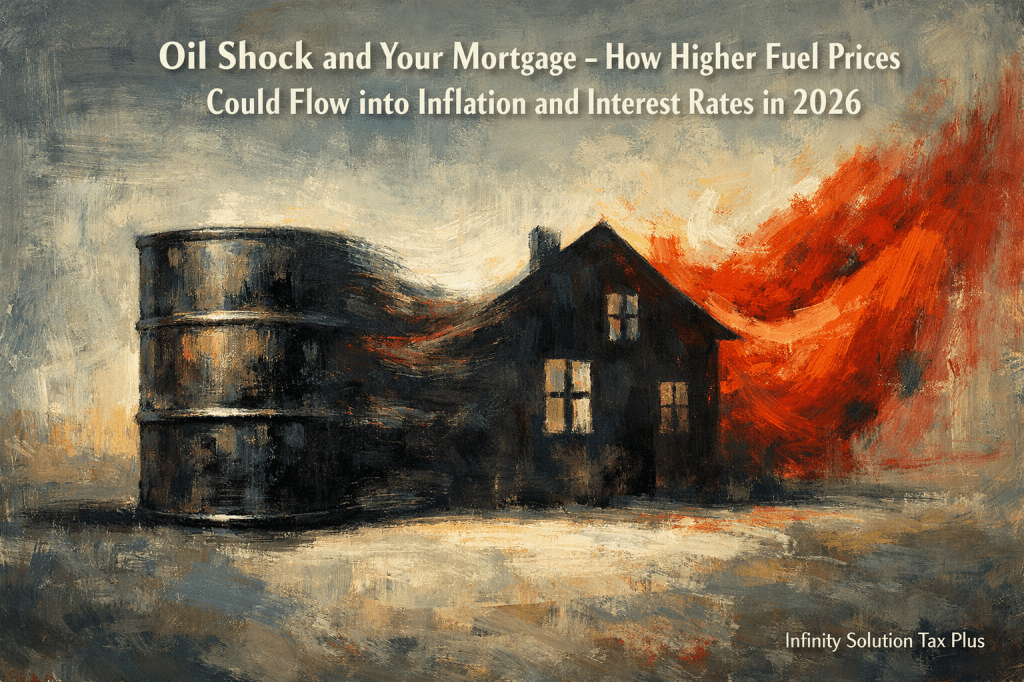
Escalated tensions in the Middle East have pushed financial markets to price in the risk of an oil supply disruption, with analysts warning that a sustained rise in crude prices could flow through to Australian petrol, transport, and energy costs in the coming weeks.
For households already managing tight budgets, the bigger question is not just what happens at the bowser — but what it means for inflation and, ultimately, mortgage rates. As any experienced accountant Box Hill will tell you, energy shocks often ripple much further than expected.
At present, inflation remains above the Reserve Bank of Australia’s (RBA) target band, with the Consumer Price Index rising 3.8% over the year to January 2026. That backdrop makes policymakers particularly sensitive to fresh price pressures.
Why Oil Prices Matter for Inflation
Oil feeds into the economy in three primary ways:
1. Direct fuel costs
Petrol and diesel prices rise quickly when global oil prices spike. The ACCC monitors fuel pricing cycles and wholesale-to-retail margins, noting that prices can move sharply during periods of global volatility.
2. Transport and logistics
Higher diesel costs increase freight expenses, which businesses often pass on through higher prices for groceries, construction materials, and consumer goods.
3. Inflation expectations
If households and businesses expect prices to keep rising, wage demands and pricing decisions can reinforce broader inflation.
When headline inflation is already elevated, an oil shock can complicate the RBA’s path back to its 2-3% target range.
What This Means for Interest Rates
The RBA sets the cash rate to achieve price stability and full employment. Changes to the cash rate flow through to variable mortgage rates and many fixed-rate products via the banking system.
A sustained oil spike could prompt the RBA to delay or reconsider rate cuts, particularly if fuel-driven inflation proves persistent.
In practical terms:
- If inflation rises again, rate cuts may be postponed
- If inflation expectations lift, policy may stay restrictive for longer
- Mortgage holders could face extended periods of higher repayments
For a household with a $700,000 mortgage, even a modest rate change can mean thousands of dollars per year in cash flow impact.
Who Is Most Exposed?
- Mortgage holders — particularly those on variable rates — face the most immediate risk if rate relief is delayed.
- Small businesses with high transport or energy costs may see margin pressure.
- Renters could also feel indirect effects if landlords face higher financing costs.
From a planning perspective, now may be an appropriate time to:
- Review fixed versus variable loan structures
- Stress-test household budgets at slightly higher rates
- Reassess discretionary spending exposure to fuel costs
A proactive discussion with a qualified Box Hill accountant can help clarify how macroeconomic shifts translate into personal financial decisions.
Final Thoughts: Watch the Data, Not the Headlines
Oil shocks can change quickly. The key variable will be whether higher energy costs translate into sustained inflation pressure over the coming months.
Upcoming CPI releases and RBA board decisions will provide clearer direction. Until then, households should focus on resilience rather than speculation.
At Infinity Solution Tax Plus, a trusted accountant in Box Hill can assist with cash-flow planning, debt structuring considerations, and broader financial positioning in uncertain economic conditions.
Disclaimer: This article contains general information only and does not constitute financial or taxation advice. You should seek personalised advice from a registered tax or financial professional.