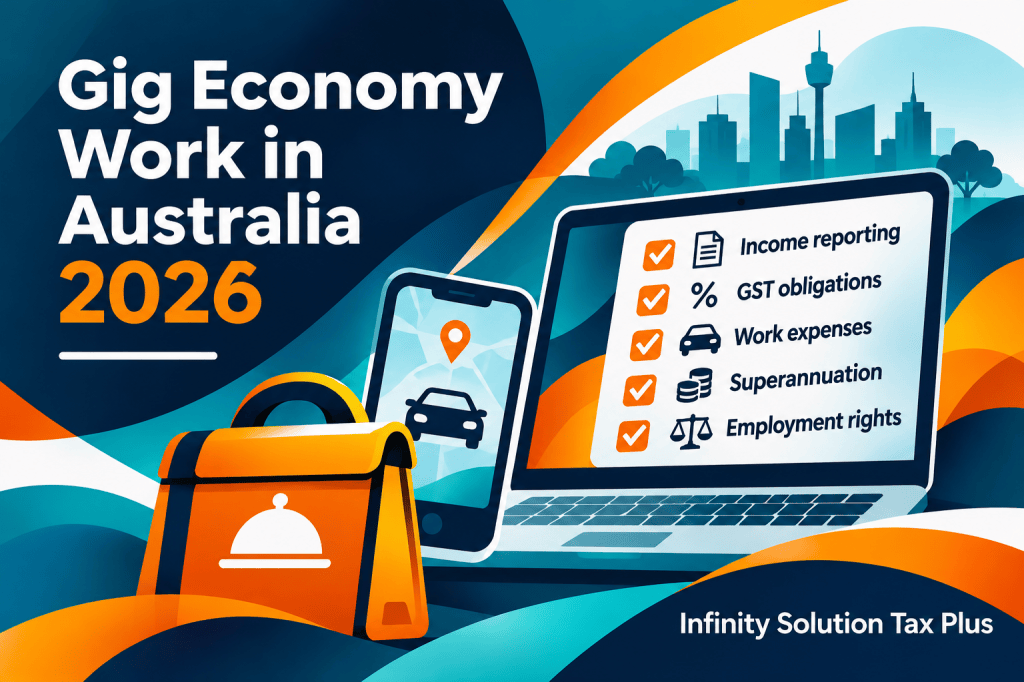
Australia’s gig economy provides flexible earning opportunities for delivery drivers, rideshare operators, freelancers and people completing tasks through digital platforms. However, earning income through an app does not remove taxation, record-keeping or business compliance obligations.
The Australian Bureau of Statistics (ABS) scheduled new Digital Platform Workers information for 24 November 2026, as part of its Working Arrangements and Characteristics of Employment publications. The update relates to employment research with an August 2025 reference period.
For individuals earning income through multiple platforms, understanding their obligations is essential. Consulting an experienced accountant box hill can help workers manage income reporting, deductions and business tax requirements.
Australian Bureau of Statistics – Working Arrangements
What Is Gig Economy Work?
Gig economy work generally involves providing services or completing individual tasks through websites or mobile applications.
Common examples include:
- Food and parcel delivery services.
- Rideshare and passenger transport.
- Freelance design, writing and technology services.
- Cleaning, maintenance and other task-based services.
Importantly, not everyone working through a digital platform has the same employment or taxation status. Some workers are employees, while others are independent contractors or sole traders.
Do Gig Workers Need to Declare Their Income?
The Australian Taxation Office (ATO) requires individuals to report assessable income earned through digital platforms, including occasional or supplementary earnings.
This may include payments, bonuses and tips associated with providing services.
The way income is reported depends on whether the worker operates a business, earns non-business income or is employed by another organisation.
Under the Sharing Economy Reporting Regime, certain digital platforms report transaction information to the ATO. However, workers must still declare their income correctly because platform-reported amounts do not automatically pre-fill their tax returns.
ATO – How to Report Income Earned Online
GST Obligations: What Workers Should Know
GST requirements depend on the type of activity undertaken.
For most businesses providing services through digital platforms, GST registration becomes compulsory when GST turnover reaches $75,000, including when that threshold is expected to be reached under the applicable registration rules.
However, rideshare drivers providing taxi travel for GST purposes must generally register for GST before their first trip, regardless of their earnings.
This distinction is important for workers operating across multiple platforms. Workers combining rideshare activities with other business services should also consider how their activities affect their overall GST obligations.
ATO – Ride-Sourcing Registration Requirements
What Expenses Can Gig Workers Claim?
Eligible workers may claim deductions for expenses directly related to earning assessable income.
Depending on their activities, these may include:
- Business-related vehicle expenses.
- Mobile phone and internet costs.
- Equipment and protective items.
- Platform-related fees and charges.
Expenses must be supported by appropriate records, and private-use portions generally cannot be deducted. Vehicle deductions are also subject to specific calculation and record-keeping rules.
Maintaining receipts, platform statements and vehicle records throughout the financial year can reduce errors when preparing tax returns.
A trusted accountant in Box Hill can help workers identify applicable deductions and maintain suitable documentation.
ATO – Income and Deductions for Providing Services
Employment Rights and Superannuation
Gig workers should understand their employment classification because it affects workplace protections and superannuation entitlements.
Employers generally must make compulsory superannuation contributions for eligible employees.
Some independent contractors may also be entitled to superannuation guarantee contributions when their contracts are wholly or principally for their personal labour. Holding an Australian Business Number does not automatically exclude a contractor from these entitlements.
Contractors who do not qualify for compulsory contributions may need to make their own retirement savings arrangements.
ATO – Tax and Super Obligations
From 17 August 2026, new minimum standards have applied to certain employee-like workers performing on-demand delivery services through digital platforms.
The standards include minimum pay arrangements and additional protections. They do not automatically apply to every gig worker or every type of digital platform activity.
Fair Work Ombudsman – Minimum Standards for On-Demand Delivery Workers
Final Thoughts
Digital platform work offers flexibility, but workers must understand the financial and regulatory responsibilities associated with their arrangements.
Income reporting, GST registration, record-keeping, superannuation and workplace protections should all be considered when assessing the financial benefits of gig work.
Infinity Solution Tax Plus, as a local Box Hill accountant, assists individuals and sole traders with taxation obligations, income reporting and business compliance.
As digital platform work continues to evolve, staying informed about ATO requirements and workplace protections can help workers make better financial decisions.
Disclaimer: This article contains general information only and does not constitute financial or taxation advice. You should seek personalised advice from a registered tax or financial professional.