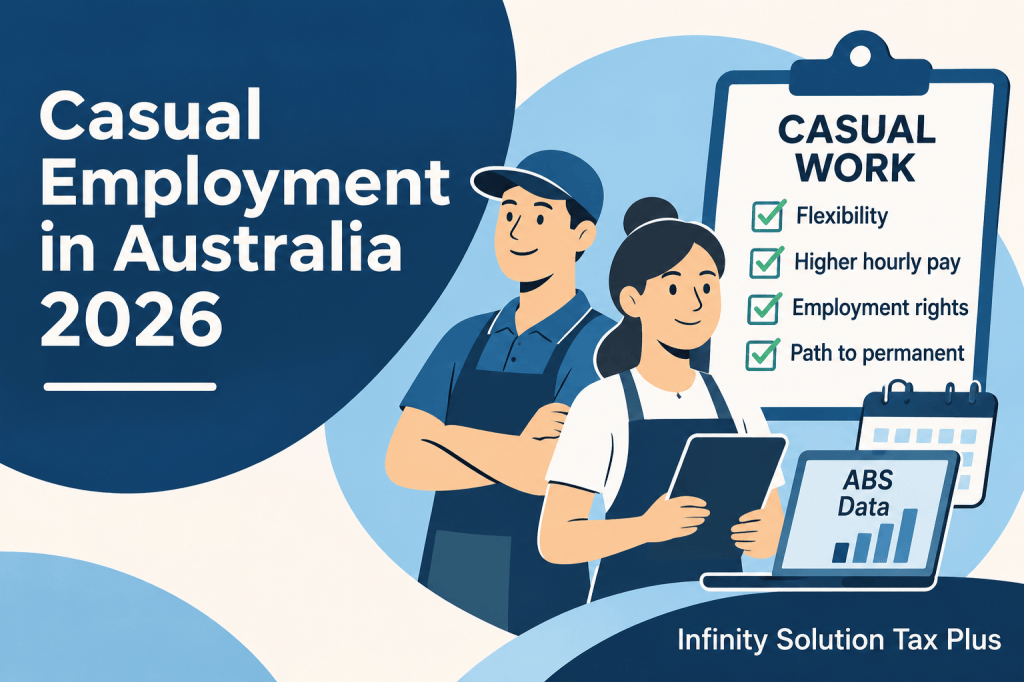
Casual employment remains an important part of Australia’s labour market, providing flexibility for employees and businesses. However, balancing flexible working arrangements with income stability and employment benefits continues to be a key consideration.
New Casual Experience figures reported on 24 November 2026 from the Australian Bureau of Statistics (ABS) show that 74% of casual employees prefer casual employment. The findings highlight the importance of flexibility while also raising questions about financial security and access to permanent employment.
For workers managing irregular earnings, understanding employment conditions and taxation obligations is essential. An experienced accountant Box Hill can assist with tax planning and managing changing income.
Australian Bureau of Statistics – Working Arrangements
What Does the Latest ABS Data Reveal?
The 2025–26 Casual Experience figures provide insight into Australian workers’ preferences.
Key findings include:
- 74% of casual employees prefer casual employment.
- 53% of those preferring casual employment identify flexibility as their main reason.
- 25% nominate higher hourly pay as their main reason.
- 79% of casual employees have never discussed moving to permanent employment with their employer.
These findings suggest that casual employment remains attractive to many workers, although preferences vary depending on personal circumstances and financial priorities.
The figures were included in the ABS Working Arrangements release through an update dated 24 November 2026, rather than through a completely new annual release.
Human Resources Director – ABS Casual Employment Findings
Casual Employment: Flexibility Versus Financial Stability
Casual workers generally receive a casual loading or specific casual pay rate, which helps compensate for certain benefits available to permanent employees.
However, casual employment can create financial challenges, particularly where working hours vary significantly.
Potential considerations include:
- Fluctuating weekly or fortnightly income.
- Limited access to paid annual and personal leave.
- Difficulty maintaining consistent household savings.
- Challenges demonstrating stable income when applying for loans.
- The need to plan for periods when fewer shifts are available.
Casual employees nevertheless retain important workplace protections and entitlements, including 10 days of paid family and domestic violence leave per year under the National Employment Standards.
Fair Work Ombudsman – Casual Employees
Can Casual Employees Become Permanent?
Australian employment law provides eligible casual employees with a pathway to permanent employment.
Under the employee choice pathway, a casual employee may notify their employer in writing of their intention to change to permanent employment when relevant eligibility requirements are satisfied.
Generally, employees must have worked for at least six months, or twelve months in a small business, and believe they no longer meet the definition of casual employment.
The pathway is not automatic, and employers may refuse requests on specified lawful grounds. Additional eligibility restrictions may also apply.
Employees considering permanent employment should compare their overall remuneration, leave entitlements and expected working arrangements rather than focusing exclusively on hourly pay.
Fair Work Ombudsman – Becoming a Permanent Employee
Tax and Financial Planning Considerations
For casual employees, variable earnings can make financial planning more complicated.
Important considerations include:
- Monitoring annual taxable income across multiple employers.
- Reviewing tax withholding arrangements.
- Maintaining records of eligible work-related expenses.
- Checking employer superannuation contributions.
- Establishing savings to manage periods of reduced income.
A trusted accountant in Box Hill can help workers understand their taxation obligations and maintain appropriate financial records.
Final Thoughts
The latest ABS findings demonstrate that many Australians value the flexibility offered by casual employment.
Nevertheless, employment flexibility should be considered alongside income security, leave entitlements and longer-term financial goals.
Infinity Solution Tax Plus, as a local Box Hill accountant, assists individuals with tax compliance and practical financial planning considerations.
As employment arrangements continue to evolve, understanding workplace rights and maintaining accurate financial records will remain important.
Disclaimer: This article contains general information only and does not constitute financial or taxation advice. You should seek personalised advice from a registered tax or financial professional.