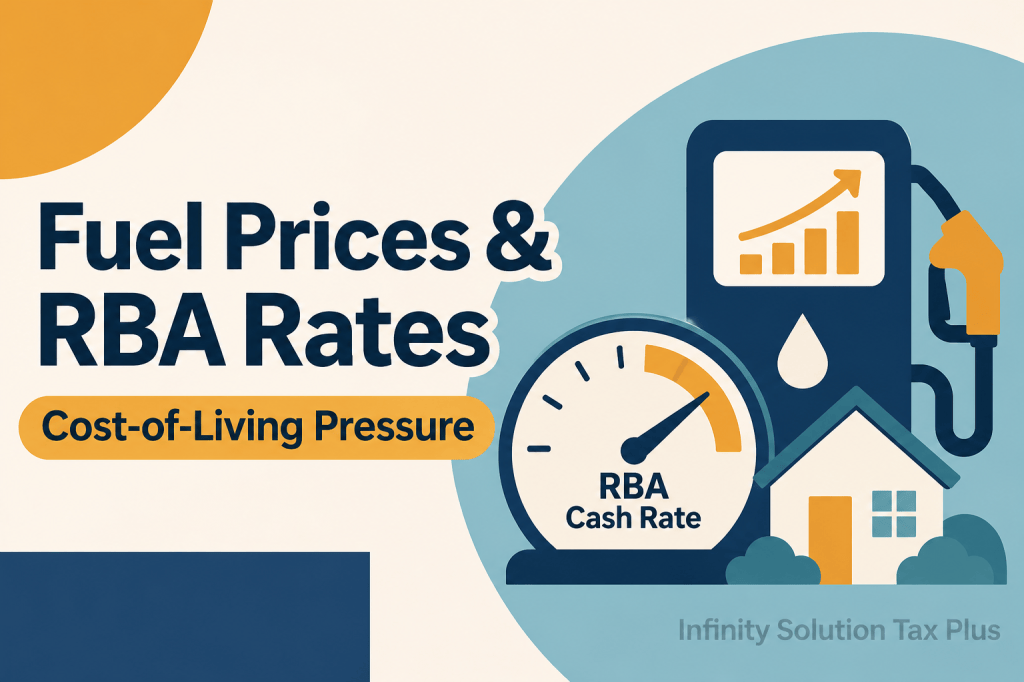
Rising petrol and diesel prices are adding another layer of financial pressure for Australian households and businesses, with higher transport costs contributing to inflation and influencing the Reserve Bank of Australia’s (RBA) interest rate decisions.
On 3 November 2026, the RBA increased the official cash rate by 0.25 percentage points to 4.85%, effective from 4 November 2026, citing persistent inflation, higher fuel costs and broader economic pressures. The decision highlights the challenge of controlling inflation while households are already managing elevated living expenses.
For individuals and small businesses working with an accountant box hill, understanding the relationship between fuel prices, inflation and interest rates can support more informed financial planning.
RBA – November 2026 Monetary Policy Decision
Why Are Fuel Prices Increasing Inflation?
Australia’s fuel prices are heavily influenced by international oil markets, refining costs, exchange rates and domestic taxes. Global energy supply disruptions have contributed to significant price volatility throughout 2026.
According to the RBA’s November Statement on Monetary Policy, retail fuel prices made the largest contribution to the unexpected increase in headline inflation during the September quarter.
According to the RBA, automotive fuel contributed approximately 0.4 percentage points to year-ended headline inflation in the September 2026 quarter, highlighting its contribution to the latest inflation outcome.
Higher fuel prices also affect businesses that rely on transport, freight and distribution. As operating costs increase, some businesses pass these expenses on to consumers through higher prices for groceries, deliveries and other goods and services.
RBA – November 2026 Economic Conditions
How Do Fuel Prices Influence RBA Interest Rate Decisions?
The RBA aims to maintain inflation within its 2–3% target range over time.
Although higher petrol prices directly increase inflation, the RBA does not automatically raise interest rates whenever fuel becomes more expensive.
Instead, it considers whether fuel-related costs are spreading across the economy, influencing business pricing decisions and increasing inflation expectations.
In November 2026, the RBA raised the cash rate to 4.85%, reflecting both higher energy prices and persistent domestic inflation.
Its latest forecasts indicate that headline inflation could reach 4.5% in the December 2026 quarter, before gradually declining towards the inflation target.
This suggests that interest rate relief may remain uncertain while inflation pressures persist. However, future decisions will depend on incoming economic data rather than fuel prices alone.
RBA – November 2026 Economic Outlook
What Does This Mean for Household Cost-of-Living Pressures?
Higher fuel prices affect households directly through transport expenses and indirectly through the cost of everyday goods.
For example, a household purchasing 50 litres of petrol each week would spend an additional $40 weekly if the price increased by 80 cents per litre. That represents approximately $2,080 annually, assuming the higher price and fuel consumption remained unchanged.
Households with variable-rate mortgages may face additional pressure if lenders pass on increases in the RBA cash rate.
For illustration, a 0.25 percentage-point increase on a $600,000 mortgage with 25 years remaining could add approximately $93 to monthly repayments, assuming a starting interest rate of 6%, a standard principal-and-interest loan and full pass-through of the increase.
These combined pressures can reduce disposable income and limit household spending flexibility.
How Are Small Businesses Affected?
Small businesses may experience higher delivery costs, increased supplier prices and reduced consumer spending.
Businesses operating vehicles or relying on freight should review their operating budgets and pricing arrangements.
Practical considerations include:
- Monitoring fuel and transport expenses.
- Reviewing cash-flow forecasts and supplier costs.
- Checking eligibility for fuel-related tax deductions and fuel tax credits.
- Maintaining accurate records of business vehicle expenses.
Fuel tax credit eligibility depends on the business activity, fuel use and applicable Australian Taxation Office requirements.
The ATO generally excludes fuel used in light vehicles of 4.5 tonnes gross vehicle mass or less travelling on public roads from fuel tax credits. Eligible businesses must meet registration and record-keeping requirements. Ordinary business motor vehicle deductions are subject to separate rules.
Financial Planning During Higher Inflation
With fuel prices and interest rates creating uncertainty, households and businesses may benefit from reviewing budgets, debt commitments and cash-flow arrangements.
Infinity Solution Tax Plus, as a trusted Box Hill accountant, assists individuals and businesses with tax compliance, expense management and financial planning considerations.
Understanding how rising operating costs affect taxable income and business cash flow can support better financial decisions.
Final Thoughts
Higher fuel prices are contributing to Australia’s inflation pressures and have become an important consideration in RBA interest rate decisions.
While the November 2026 rate increase reflects several economic factors, persistent fuel-related inflation could complicate the outlook for future interest rate reductions.
Australians should continue monitoring RBA announcements, reviewing household expenses and preparing for possible changes in borrowing costs.
Working with a trusted accountant in Box Hill can help individuals and businesses understand their taxation obligations and plan for changing economic conditions.
Disclaimer: This article contains general information only and does not constitute financial or taxation advice. You should seek personalised advice from a registered tax or financial professional.