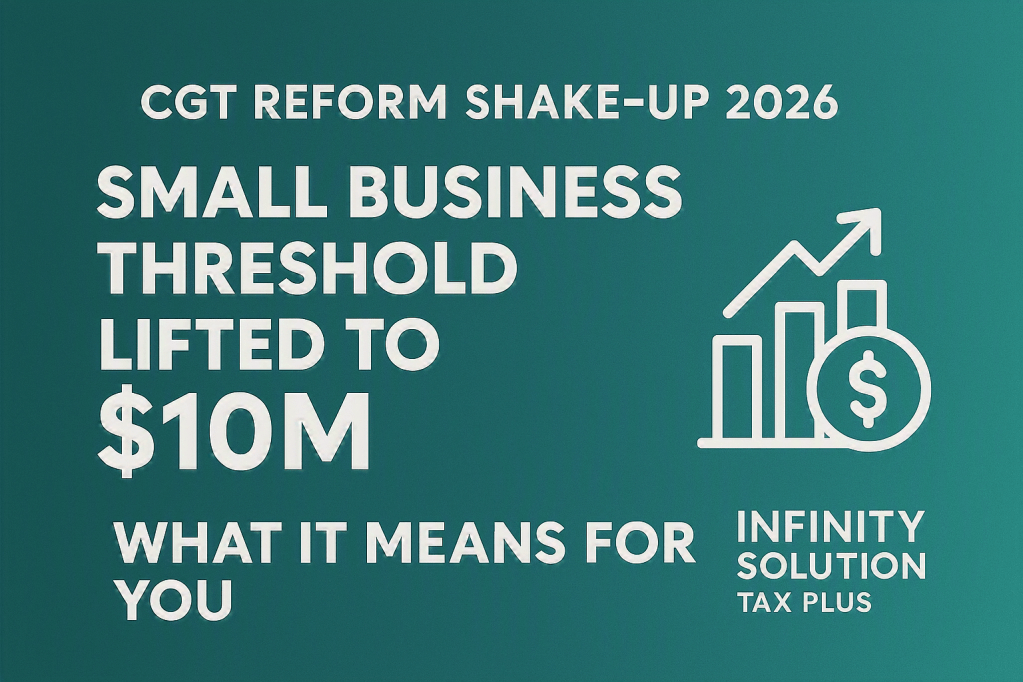
Australia’s capital gains tax (CGT) reform agenda has entered a critical phase, with June 2026 updates confirming a major shift for small and medium businesses. For business owners seeking guidance from an experienced accountant Box Hill, this change is particularly important — the Federal Government has lifted the turnover threshold for key small business CGT concessions from $2 million to $10 million, dramatically expanding eligibility. This reform, alongside broader changes proposed in the 2026–27 Federal Budget, is set to significantly reshape tax outcomes and planning strategies. [sbs.com.au], [pm.gov.au]
What Changed in June 2026?
The most immediate update is the expansion of the small business CGT concession threshold to $10 million turnover, significantly increasing the number of businesses that can access tax relief on asset disposals. Previously, many growing businesses lost eligibility once they exceeded $2 million turnover, limiting access to concessions such as the active asset reduction.
This announcement was made following consultation and industry feedback on the May 2026 Federal Budget reforms, which also proposed major structural changes to CGT. These include replacing the 50% CGT discount with inflation indexation and introducing a 30% minimum tax rate on capital gains from 1 July 2027. [aph.gov.au], [treasury.gov.au]
Why This Matters for SMEs and Advisors
For SMEs, this is a substantial expansion of tax planning opportunities. Around 2.7 million Australian businesses are expected to benefit from expanded CGT access, particularly when selling business assets, shares, or goodwill. [sbs.com.au]
From a practical standpoint, business owners working with a professional
or local tax adviser can now reassess eligibility for concessions that previously did not apply, opening opportunities to:
- Reduce capital gains on business exits
- Access retirement CGT exemptions
- Defer gains via rollover relief
- Optimise group restructures with lower tax friction
This makes the reform highly relevant for succession planning, mergers, and asset transitions in the next 12–24 months.
How the Broader CGT Reform Interacts
While the threshold increase is favourable, it must be considered alongside upcoming structural CGT changes. The Government’s proposal to replace the 50% discount with inflation‑based indexation means taxpayers may face higher effective tax rates on some gains after 2027.
In addition, proposed changes to negative gearing and discretionary trusts are designed to align tax treatment across asset classes and reduce perceived inequities in the tax system.
This creates a two‑phase planning environment:
- Pre‑2027: Access broader concessions and potentially lower tax outcomes
- Post‑2027: Adjust to new rules with different calculation methods and minimum tax thresholds
Key Strategic Implications
1. More Businesses Now Qualify
The increased turnover threshold allows mid‑sized businesses to access concessions previously unavailable, significantly reducing capital gains exposure in sale or restructuring scenarios.
2. Timing of Transactions Is Critical
With major rule changes scheduled from 1 July 2027, taxpayers must assess whether to bring forward or defer asset disposals depending on projected tax outcomes.
3. Increased Complexity Requires Advice
The coexistence of:
- Legacy CGT rules
- Transitional provisions
- New concession structures
means professional tax modelling is essential. Engaging an experienced accountant in Box Hill or specialised tax advisor ensures decisions align with both current and future legislation.
What Should You Do Now?
Given the scale of these reforms, proactive planning is essential. Business owners should:
- Review turnover eligibility under the new $10M threshold
- Model CGT scenarios under current vs proposed rules
- Identify potential asset sale or restructuring opportunities before 2027
- Evaluate eligibility for startup or innovation concessions (where applicable)
The current environment presents a strategic window for tax optimisation, particularly for growing SMEs approaching exit or expansion phases.
Conclusion
The expansion of small business CGT concessions to a $10 million turnover threshold marks one of the most significant SME tax changes in recent years. While it unlocks new planning opportunities and potential tax savings, it also introduces complexity when combined with broader CGT reforms scheduled for 2027.
Early engagement with a qualified adviser — such as a trusted Box Hill accountant — will be essential to navigate these changes effectively, minimise risk, and maximise outcomes in this evolving tax landscape.
Disclaimer
This article is general information only and does not constitute financial or tax advice. Taxation laws are complex and subject to change. You should seek professional advice from a registered tax agent tailored to your individual circumstances before making any financial or tax decisions.