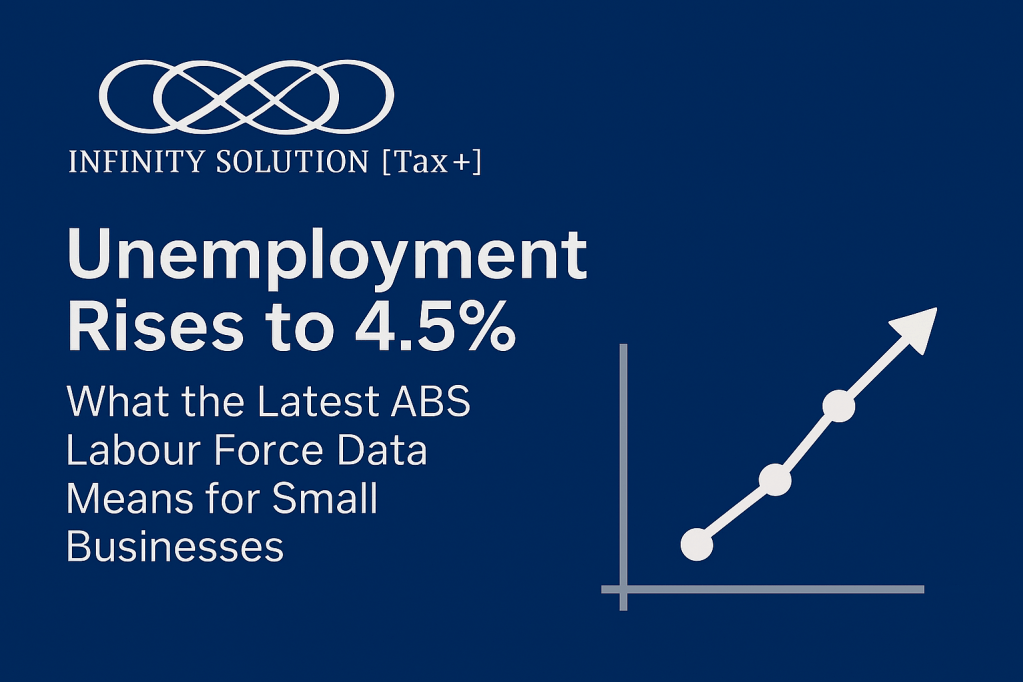
Australia’s labour market has softened, with the Australian Bureau of Statistics (ABS) reporting that the national unemployment rate increased to 4.5% in April 2026. While this remains low by historical standards, the rise represents a clear change in momentum after an extended period of labour market tightness. For small and medium‑sized businesses, this shift has practical implications for hiring, payroll management, cash flow, and tax planning. [abs.gov.au]
What the latest ABS data is telling us
The ABS Labour Force, Australia – April 2026 release shows that employment growth slowed during the month, while labour force participation remained relatively high. This combination resulted in a higher unemployment rate, reflecting softer hiring rather than large‑scale job losses. Importantly, total employment levels remain elevated, but job creation is no longer keeping pace with population growth, signalling a gradual easing rather than a sharp downturn.
Implications for small business owners
For small businesses, a rising unemployment rate can marginally reduce recruitment pressure, particularly in sectors that previously struggled to attract staff. However, the same data also points to slowing economic activity, which can weigh on consumer demand. Businesses in discretionary sectors such as retail, hospitality, and construction may experience tighter trading conditions as households become more cautious with spending. The labour market shift, therefore, presents both opportunities and risks, depending on industry exposure.
Payroll, wages, and tax planning considerations
Despite the increase in unemployment, there is no evidence of a rapid wage decline. Payroll costs remain a key pressure point for employers, especially when combined with superannuation obligations and upcoming reforms such as Payday Super. This makes accurate forecasting of PAYG withholding, super contributions, and contractor arrangements increasingly important. For many businesses, engaging an accountant Box Hill to review payroll structures and tax compliance can help manage costs without increasing regulatory risk. [ato.gov.au]
The broader economic backdrop
The Reserve Bank of Australia has indicated that labour market conditions are one of several factors influencing its policy outlook. While inflation remains a concern, uneven economic momentum means the RBA is closely monitoring employment trends for signs of broader slowing. A softer labour market can eventually ease inflationary pressure, but it also increases the importance of prudent cash‑flow management for businesses with variable revenue or existing debt facilities. [rba.gov.au]
What should small businesses do now?
Rather than reacting hastily to a single data point, business owners should use this period to reassess workforce needs, review cost structures, and ensure tax obligations are up to date. Scenario planning around revenue, staffing levels, and financing can help businesses remain resilient if conditions continue to soften. Working with an experienced accountant in Box Hill can support informed decisions that balance compliance, efficiency, and long‑term sustainability.
Final thoughts
An unemployment rate of 4.5% does not indicate economic distress, but it does confirm that Australia’s labour market is no longer tightening. For small businesses, the key is understanding what this shift means in practical terms and responding with measured, strategic planning rather than reactive cost‑cutting. Businesses that stay informed and seek timely professional advice are best placed to navigate the changing economic environment.
Disclaimer:
This article is general information only and does not constitute financial, tax, or legal advice. You should seek personalised advice from a qualified professional before making business or financial decisions.