Context: Why Trusts Are Back in the Spotlight
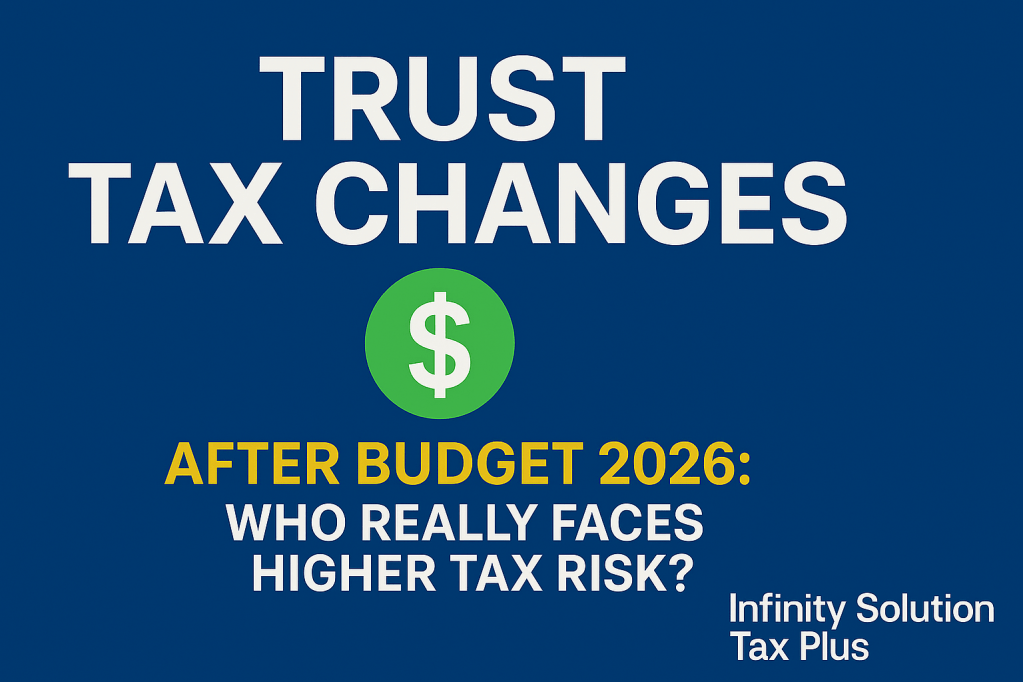
The 2026–27 Federal Budget has reignited intense debate around the taxation of trusts, with practitioners warning that certain structures may now face effective triple taxation. Industry commentary published this week highlights how new integrity measures and interaction effects between trust distributions, company tax, and personal marginal rates could significantly increase tax costs for family groups, professional firms, and SME owners operating through discretionary trusts. For many Melbourne-based businesses working with an accountant Box Hill, this represents one of the most material tax risks emerging from the Budget.
What Has Actually Changed in Budget 2026
While the government has framed the reforms as fairness and integrity measures, the technical details reveal broader consequences. The Budget confirmed tighter rules around trust income characterisation, limitations on streaming, and stronger anti‑avoidance overlays that interact with Division 7A and minimum tax proposals affecting bucket companies. In practice, this means trust income can now be taxed first at the trust level (where integrity rules apply), again at the company level when distributed to a corporate beneficiary, and a third time when funds are ultimately paid to individuals. [ato.gov.au]
Where the Triple Taxation Risk Arises
The “triple tax” concern is not a new standalone tax, but the stacking of existing regimes. For example:
- Trust income assessed under new integrity provisions may lose access to concessions.
- Corporate beneficiaries may still pay company tax on distributions.
- Subsequent dividends to individuals attract personal tax (less franking, if limited).
Accounting bodies and tax advisers have warned that this outcome is most likely where trusts rely heavily on bucket companies for cash flow management or asset protection. This is particularly relevant for medical practices, consultants, and property‑holding family groups.
ATO and Treasury Signals
Treasury publications released alongside the Budget confirm that the government is aware of increased compliance complexity but has prioritised revenue protection over simplification. The ATO has also flagged closer scrutiny of trust arrangements during Tax Time 2026, aligning with broader compliance messaging already issued in its newsroom updates this month. This suggests that trust distributions, beneficiary resolutions, and Division 7A loans will be high‑risk review areas. [treasury.gov.au][ato.gov.au]
What Business Owners Should Be Doing Now
For trust controllers, inaction is the real danger. Businesses should:
- Re‑model trust distribution strategies under post‑Budget rules.
- Review whether bucket companies still achieve their intended outcomes.
- Ensure beneficiary resolutions and loan arrangements are watertight.
- Stress‑test cash flow impacts if effective tax rates increase.
Engaging early with an experienced accountant Box Hill or trusted adviser is critical, particularly before 30 June planning decisions are locked in. Many strategies that worked pre‑Budget may now produce unintended tax leakage if left unchanged.
Conclusion: Complexity Is the New Normal
The 2026 Budget has confirmed a clear direction of travel: trusts remain under sustained policy pressure. While not every trust will face triple taxation, the risk is real for common SME structures. Proactive review, not reactive compliance, is now essential. Infinity Solution Tax Plus, a trusted Box Hill accountant, continues to monitor ATO guidance and Treasury developments closely and will provide further updates as practical compliance details emerge.
Disclaimer: This article is general information only and does not constitute tax or financial advice. Trust taxation outcomes depend on individual circumstances and legislation as enacted. You should seek personalised advice from a qualified tax professional before taking action.