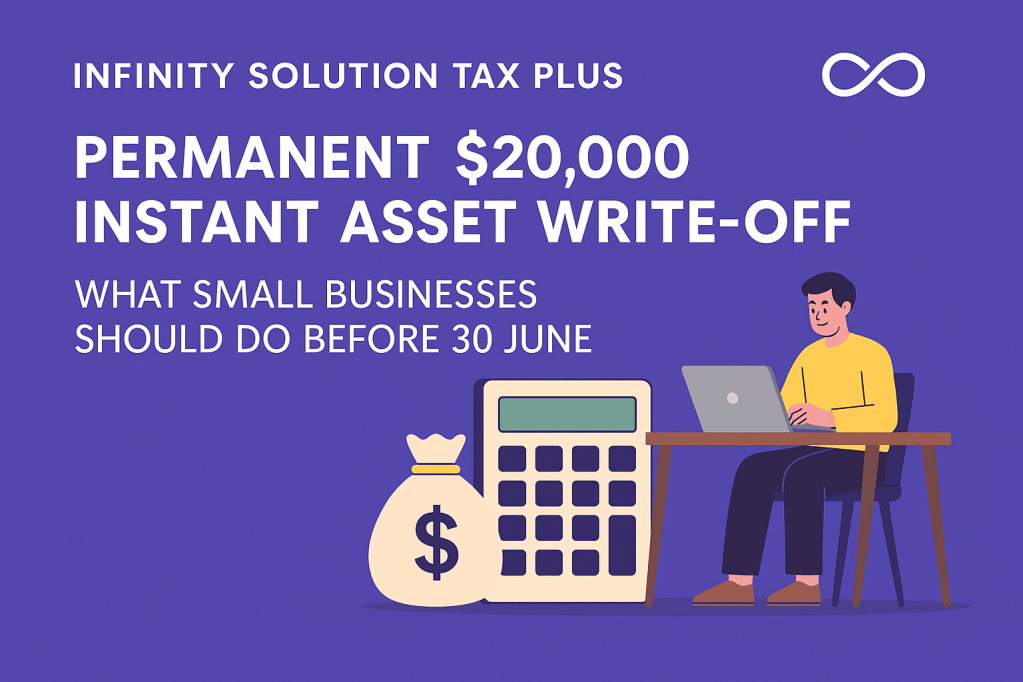
The 2026–27 Federal Budget confirmed that the $20,000 instant asset write‑off will be made a permanent feature of Australia’s small business tax system, ending years of temporary extensions and last‑minute legislative uncertainty. For eligible businesses, this reform provides greater confidence when planning capital expenditure — but it does not remove the need for careful timing, cash‑flow analysis, and compliance. For many businesses working with an accountant Box Hill, the focus now shifts from rushing purchases to making informed, strategic decisions. https://budget.gov.au/
Under the permanent rules, small businesses with aggregated turnover of less than $10 million can immediately deduct the full cost of eligible depreciating assets costing less than $20,000 per asset, provided the asset is first used or installed ready for use in the relevant income year. The threshold applies on a per‑asset basis, meaning multiple assets can be claimed if each falls below the limit. Eligible assets typically include tools, machinery, office equipment, computers, and certain business-use vehicles, subject to existing car cost limits and private‑use apportionment rules. business.gov.au – Budget measures for business
While permanence improves certainty, it does not reduce ATO scrutiny. The ATO continues to focus on whether assets are genuinely used in carrying on a business, whether private use has been correctly apportioned, and whether the timing of “installed ready for use” has been accurately recorded. Businesses that purchase assets close to 30 June must ensure delivery, installation, and operational readiness occur before year‑end to support a valid deduction. Strong record‑keeping — including invoices, payment evidence, and usage documentation — remains essential. ATO – Small business newsroom
Before 30 June, business owners should review profit forecasts, cash‑flow capacity, and operational needs, rather than purchasing assets solely for tax outcomes. If the business expects strong taxable profits, bringing forward necessary purchases may reduce tax payable while improving productivity. Conversely, if profits are modest or cash flow is tight, deferring purchases may be more appropriate, even though the threshold is now permanent. This is where advice from an experienced accountant in Box Hill or Melbourne’s eastern suburbs can help align tax deductions with broader financial strategy. ATO – Instant asset write‑off overview
The permanence of the $20,000 threshold also supports long‑term asset planning. Businesses can now adopt staged replacement strategies — upgrading equipment progressively rather than making rushed bulk purchases each June. When combined with other Budget measures, such as loss carry‑back refunds and PAYG instalment flexibility, the instant asset write‑off should be viewed as part of an integrated tax and cash‑flow framework rather than a standalone concession. Treasury – Budget publications
Key Takeaway
The permanent $20,000 instant asset write‑off is a positive shift toward stability in small business tax policy, but it is not a blanket incentive to spend. Eligibility rules, timing requirements, and documentation standards still apply. Businesses that plan asset purchases strategically — with professional guidance — are best placed to benefit while remaining compliant. If you’re unsure how this measure applies to your circumstances, speaking with a proactive Box Hill accountant can help turn this reform into a genuine financial advantage.
Disclaimer:
This article is general information only and does not constitute tax or financial advice. Tax outcomes depend on individual circumstances and current legislation. You should seek personalised advice from a registered tax agent or accountant before making decisions.