Australian small businesses continue to face financial pressures, with cash-flow management, overdue invoices and operating costs remaining important concerns for business owners.
For retailers, hospitality operators and sole traders, understanding the warning signs of financial distress is essential. Working with an accountant box hill can help business owners monitor their financial position, manage tax obligations and plan ahead.
Recent reporting has renewed attention on Australian business failures. While individual reports may highlight financial difficulties, official insolvency statistics provide a more reliable basis for understanding the scale of corporate financial distress.
What Do Australia’s Latest Insolvency Figures Show?
The Australian Securities and Investments Commission (ASIC) reported that 14,153 companies entered external administration for the first time during the 2025–26 financial year, compared with 14,722 in 2024–25.
This represents a decrease of approximately 4%. However, the reduction does not necessarily mean that financial pressures have eased across all industries.
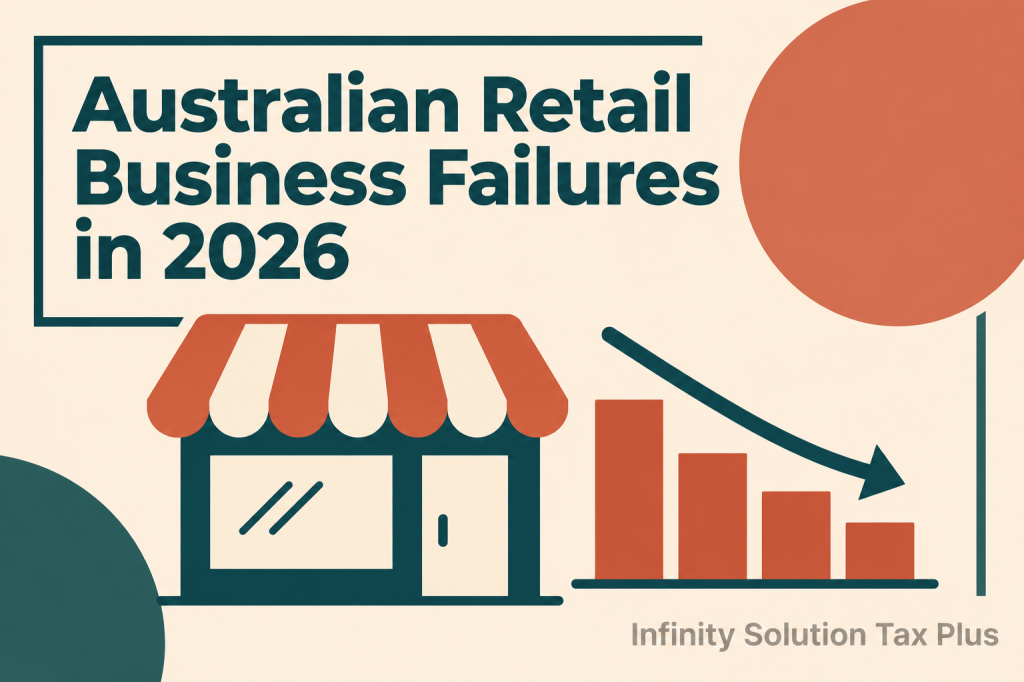
Retail trade accounted for 7.1% of external administration appointments during 2025–26, while construction and accommodation and food services accounted for larger shares.
Importantly, these figures measure corporate external administrations, not all Australian business closures. They do not capture every business that voluntarily closes, nor do they represent insolvency outcomes for sole traders operating outside a company structure.
Consequently, the statistics should not be interpreted as the total number of retail businesses that failed during the year.
ASIC Corporate Insolvency Update – October 2026
Why Cash Flow Matters for Small Businesses
A business can generate sales and still experience financial difficulties when customer payments arrive later than expected or operating expenses fall due before sufficient cash is available.
For retailers and other small businesses, common financial pressures include:
- Overdue customer invoices and delayed payments.
- Rising supplier, rental and operating costs.
- Insufficient funds reserved for GST and PAYG withholding.
- Difficulty meeting tax and superannuation obligations.
- Limited cash reserves to manage unexpected expenses.
The Australian Taxation Office (ATO) emphasises the importance of maintaining accurate business records, including debtor and creditor information. These records help businesses monitor outstanding amounts and better understand their cash-flow position.
ATO – Debtor and Creditor Records
Practical Steps to Reduce Financial Risk
Small business owners can strengthen financial management by taking several practical steps.
1. Prepare regular cash-flow forecasts
Monitor expected income and expenses to identify potential funding shortfalls before payment deadlines arise. Forecasts should be updated when trading conditions change.
2. Review overdue invoices
Track outstanding customer balances, establish clear payment terms and follow up overdue accounts promptly.
3. Set aside funds for tax obligations
Separating funds for GST, PAYG withholding and other tax liabilities can reduce the risk of using money needed for future payments to cover everyday operating expenses.
The ATO encourages businesses to maintain accurate records and address outstanding obligations early.
ATO – Small Business Compliance Guidance
4. Address tax debts before they escalate
Businesses experiencing payment difficulties may qualify for an ATO payment plan. General interest charges normally continue to accrue while a payment plan is in place.
Certain eligible small businesses may qualify for a specific interest-free arrangement for overdue activity statement debts, subject to the applicable eligibility conditions. These arrangements should not be assumed to apply automatically.
Business owners should confirm current requirements directly with the ATO before relying on any payment arrangement.
How Accounting Support Can Help
Regular financial reviews can help business owners identify declining profit margins, overdue receivables, rising expenses and upcoming tax liabilities.
Infinity Solution Tax Plus, as a trusted accountant in Box Hill, supports businesses with accounting, tax compliance and financial planning.
Working with a box hill accountant can help business owners understand their reporting obligations, maintain reliable financial records and make informed decisions about cash-flow management.
Where a business faces serious financial distress, early consultation with an appropriately qualified insolvency professional or registered liquidator may also be necessary. Accounting support does not replace specialist insolvency advice.
Final Thoughts
Australia’s latest annual corporate insolvency figures demonstrate why business owners should look beyond headline numbers when assessing financial conditions.
Although the number of companies entering external administration declined in 2025–26, individual businesses may still experience significant cash-flow and operating pressures.
For small business owners, maintaining accurate records, reviewing cash-flow forecasts and addressing tax obligations early can support more informed decisions.
Future ASIC insolvency releases will provide additional information about corporate financial distress as the 2026–27 financial year progresses.
Disclaimer: This article contains general information only and does not constitute financial or taxation advice. You should seek personalised advice from a registered tax or financial professional.