Australia’s property investment market is facing renewed pressure as higher interest rates, falling property prices and changing investor expectations reshape borrowing decisions. The latest Australian Bureau of Statistics (ABS) figures reveal a substantial decline in investor housing finance, highlighting growing caution across the residential property market.
For property investors and business owners seeking guidance from an accountant Box Hill residents trust, these developments reinforce the importance of reviewing borrowing capacity, cash flow and tax planning before making investment decisions.
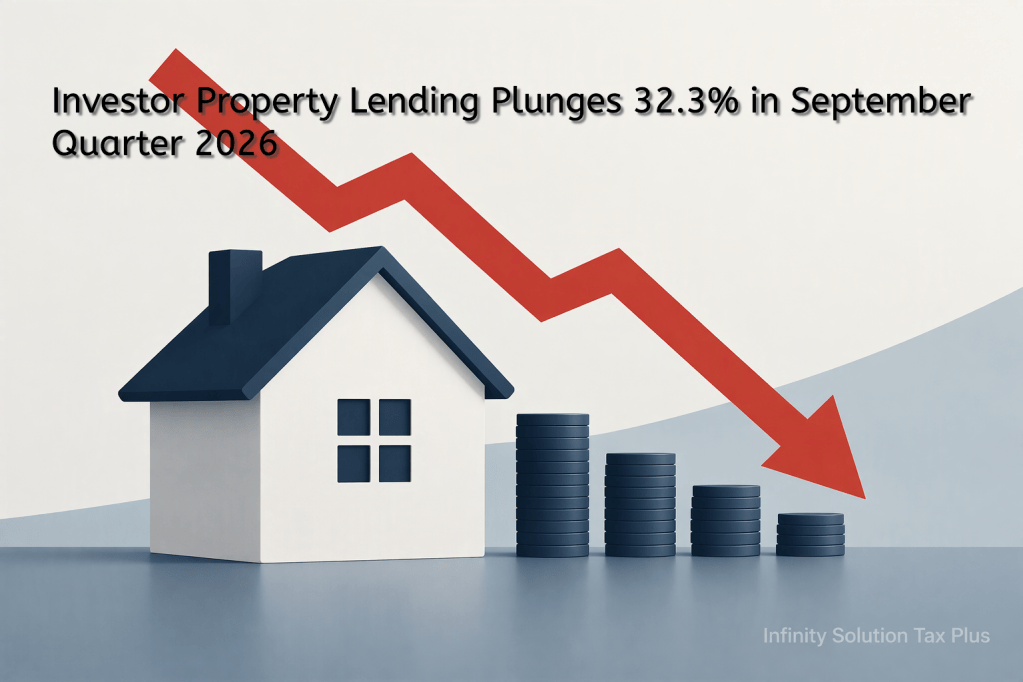
Released on 11 November 2026, the ABS Lending Indicators report shows that the value of new investor housing loan commitments fell 32.3% in the September quarter, significantly exceeding the decline recorded among owner-occupiers. ABS Lending Indicators.
ABS Lending Data Reveals Sharp Decline in Investor Activity
The September quarter figures demonstrate the scale of the lending slowdown:
- Investor lending: Down 32.3% in value to $24.7 billion.
- Investor loan numbers: Down 30.6% to 35,301 commitments.
- Owner-occupier lending: Down 5.3% in value.
- Total housing lending: Down 15.5% in value to approximately $81.2 billion.
These seasonally adjusted figures exclude refinancing and reflect new borrowing commitments rather than completed property transactions.
The ABS identified the quarterly fall in total housing lending value as the largest since the series began in September 2002.
Higher Interest Rates and Investor Uncertainty
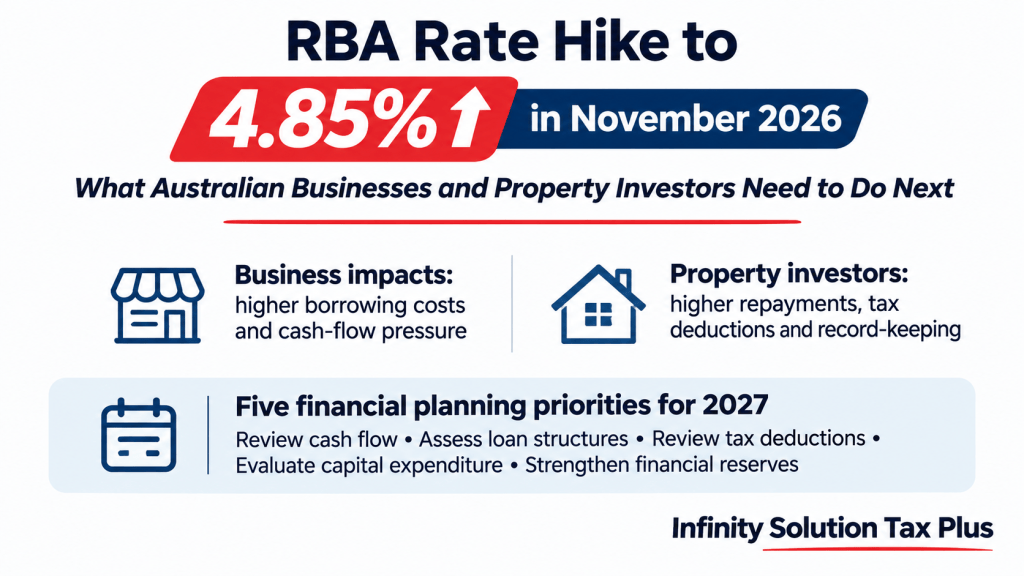
Borrowing costs remain a significant challenge. The Reserve Bank of Australia increased the official cash rate to 4.85% effective 4 November 2026, adding further pressure to mortgage repayments and investment property cash flow.
Importantly, the September lending decline preceded this latest rate increase, indicating that investor caution was already evident. The RBA’s November economic assessment also highlighted declining housing prices and persistent inflation pressures. RBA November 2026 Statement on Monetary Policy.
Potential tax policy changes and expectations of weaker property prices may also be influencing investor decisions. However, policy proposals should not be treated as enacted legislation.
Tax Planning Considerations for Property Investors
For investors across Box Hill, Doncaster and Melbourne’s eastern suburbs, changing market conditions create several important considerations.
A qualified Box Hill accountant can assist investors in reviewing:
- Interest deductions: Understanding which borrowing expenses may qualify for tax deductions.
- Depreciation: Reviewing eligible capital works and depreciating asset claims.
- Cash flow: Assessing rental income against interest, maintenance and other holding costs.
- Ownership structures: Considering the tax implications of personal, trust or company ownership.
- Capital gains tax: Evaluating potential tax liabilities before selling or restructuring investments.
Tax outcomes depend on individual circumstances, and changing an existing ownership structure can itself trigger tax consequences. ATO Tax Law and Policy Updates.
Implications for Small Businesses
The lending slowdown also warrants attention from business owners considering commercial property purchases or expansion.
ABS figures show that new business lending for property purchases declined 6.4% during the September quarter, although it remained 1.5% higher than a year earlier. This reinforces the importance of assessing borrowing arrangements independently rather than assuming all credit markets are moving together.
How Infinity Solution Tax Plus Can Help
Infinity Solution Tax Plus supports property investors and business owners with taxation planning, investment structure considerations, cash flow reviews and compliance obligations.
Working with a trusted accountant in Box Hill can help investors evaluate the taxation implications of borrowing, refinancing and property ownership while preparing for changing economic conditions.
Final Thoughts
The latest ABS figures highlight a significant adjustment in Australia’s property finance market, but weaker lending does not necessarily eliminate long-term investment opportunities.
Investors should monitor the RBA’s next interest rate decision on 8 December 2026 and the ABS December-quarter lending release scheduled for 10 February 2027. Early financial planning and informed tax decisions remain essential in an uncertain market.
Disclaimer: This article contains general information only and does not constitute financial or taxation advice. You should seek personalised advice from a registered tax or financial professional.