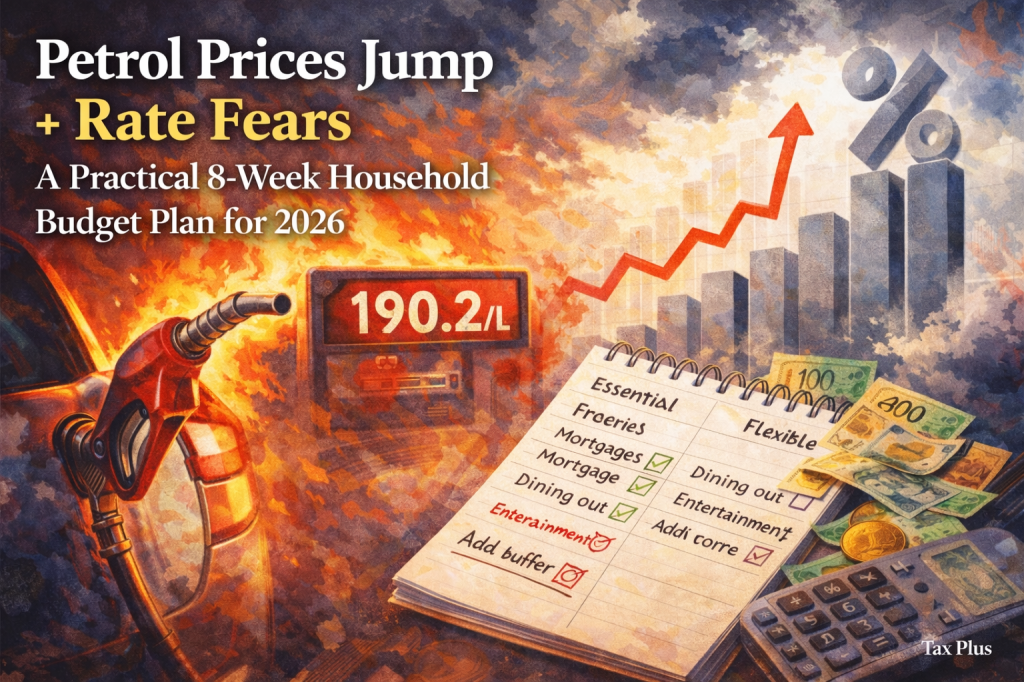
Rising petrol prices and renewed interest rate uncertainty have dented household confidence, with media describing a “double hit” for Australian families.
The Reserve Bank set the cash rate at 3.85% in February 2026 and emphasised that inflation risks remain under close watch. At the same time, global tensions and oil price volatility are contributing to energy market uncertainty.
When both fuel and borrowing costs feel unpredictable, the key is not panic — it’s short-term structure. An 8-week household reset can stabilise cash flow while policy and markets evolve.
Step 1: Reset Your Fuel Strategy
Petrol prices in Australia operate in cycles, often fluctuating weekly. The ACCC monitors these cycles and explains how retail pricing patterns work. Its quarterly petroleum reports also track broader wholesale and retail movements.
For the next eight weeks:
- Track local fuel cycles before filling up
- Avoid buying on peak cycle days where possible
- Consolidate errands to reduce short trips
- Review delivery subscriptions that duplicate shopping trips
- Compare fuel discount programs or loyalty schemes
Saving even 10–15 cents per litre across multiple fill-ups can noticeably reduce monthly fuel spend.
Step 2: Stress-Test Your Mortgage (Without Assuming the Worst)
With the cash rate at 3.85%, borrowers should understand their exposure, even if rates do not rise further.
Review:
- Your current variable interest rate
- Your minimum monthly repayment
- The impact of a hypothetical 0.25%–0.50% increase
For example, if repayments rose by $150–$300 per month, identify now which spending category would absorb the change. Pre-adjusting discretionary spending is far easier than reacting after a rate move.
Property investors should also review the after-tax impact of interest costs and ensure deductions are properly accounted for.
Step 3: Create an 8-Week “Essential vs Flexible” Budget
Short-term budgeting works best when it is simple and measurable.
Divide expenses into two categories:
Essential
- Mortgage or rent
- Utilities
- Insurance
- Groceries
- Minimum debt repayments
Flexible
- Dining out
- Streaming services
- Retail purchases
- Travel
- Non-essential subscriptions
For eight weeks, set a defined reduction target for flexible spending (for example, 20–30%). Redirect the savings into a dedicated buffer account.
The goal is not permanent austerity — it is rebuilding a short-term cash cushion.
Step 4: Revisit Government Support and Rebates
The Federal Budget outlines ongoing cost-of-living measures, including energy relief and targeted household support.
Not all households qualify, but eligibility reviews are worthwhile, particularly for:
- Families
- Concession card holders
- Students
- Lower-income households
Additionally, comparing energy providers or insurance premiums can produce immediate savings that offset fuel-related increases.
Step 5: Avoid Stress-Driven Financial Decisions
Periods of economic uncertainty often coincide with increased scam activity and rushed financial decisions.
Be cautious about:
- High-fee refinancing offers
- “Limited time” fuel rebate schemes
- Risky short-term credit products
- Buy-now-pay-later reliance for essential expenses
Verify information through official sources such as the RBA, ACCC, or government websites before acting.
Why an 8-Week Plan Works
Economic uncertainty often feels open-ended. But eight weeks is tangible.
In that time, you can:
- Reduce discretionary spending leakage
- Build a modest emergency buffer
- Review loan structures calmly
- Monitor petrol cycle patterns
- Track whether inflation trends stabilise
Fuel prices are cyclical. Interest rate decisions remain data-dependent. Short-term planning creates stability while waiting for clearer signals.
Final Thoughts
Petrol price spikes and rate uncertainty can quickly undermine household confidence. However, financial strain usually results from unmanaged accumulation rather than a single cost increase.
A structured 8-week reset — reviewing fuel usage, mortgage exposure, discretionary spending, and available rebates — can materially improve resilience without extreme lifestyle changes.
Working with a trusted accountant can also help you understand how broader economic developments affect your tax position and household cash flow, ensuring decisions are measured rather than emotional.
Disclaimer: This article contains general information only and does not constitute financial or taxation advice. You should seek personalised advice from a registered tax or financial professional.




 Infinity Solution Tax Plus