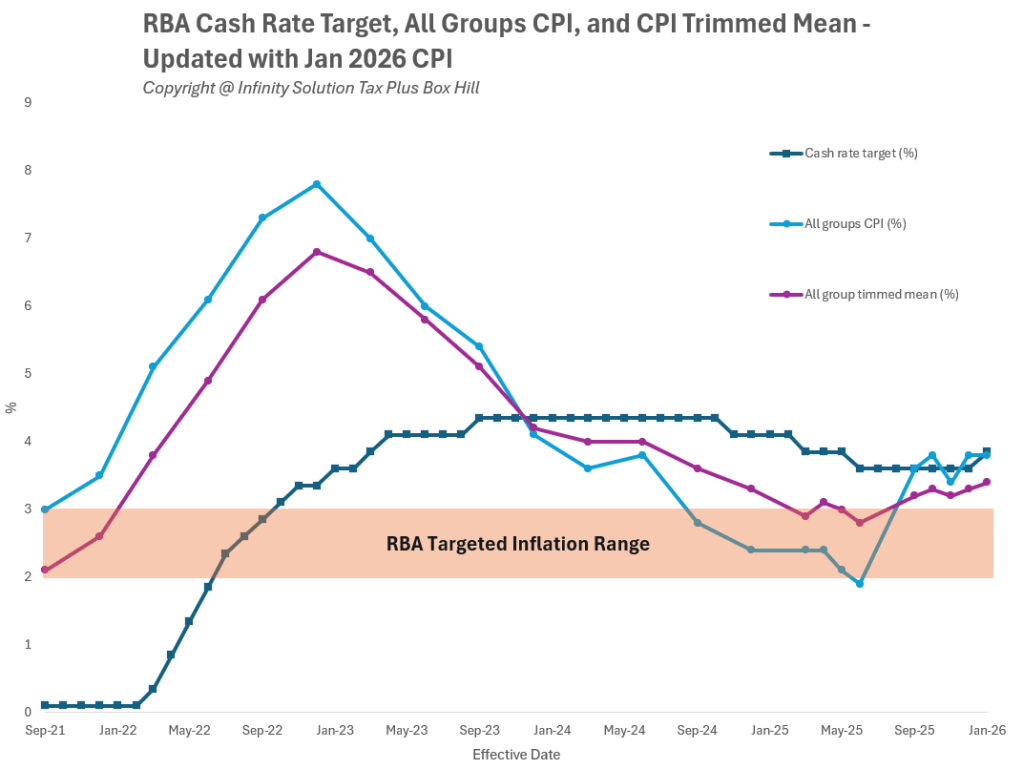
Australia’s first inflation reading for 2026 has been released, with the Australian Bureau of Statistics (ABS) publishing the January Consumer Price Index (CPI) data in late February 2026. The Monthly CPI Indicator provides a timely snapshot of price movements across key household categories, including housing, food, transport, and insurance
For households already navigating higher mortgage repayments and rising living costs, this latest inflation update is more than a headline number. Annual inflation at 3.8 per cent suggests price pressures remain above the Reserve Bank of Australia’s target range between 2% – 3%. It influences interest rate expectations, wage negotiations, government policy settings, and day-to-day budgeting decisions — issues regularly discussed with clients seeking guidance from an experienced accountant Box Hill.
What the CPI Actually Measures
The CPI tracks changes in the price of a representative “basket” of goods and services purchased by households. The ABS recently transitioned to a monthly CPI Indicator, which provides a more frequent and comprehensive snapshot of price movements.
Major expenditure groups include:
- Housing (including rents and utilities)
- Food and non-alcoholic beverages
- Transport
- Health
- Insurance and financial services
The Reserve Bank of Australia (RBA) considers multiple measures of inflation — including headline CPI and underlying measures such as trimmed mean inflation — when assessing whether inflation is sustainably returning to its 2-3 per cent target band.
Why 3.8% Matters for Households
An annual inflation rate of 3.8 per cent means that, on average, goods and services cost 3.8 per cent more than they did a year earlier.
For a household spending $80,000 per year, that equates to approximately $3,040 in additional annual costs or roughly $58 per week.
While individual spending patterns vary and not every category increases at the same pace, inflation at this level can affect:
- Mortgage Holders
If inflation remains above target, the RBA may maintain a relatively restrictive monetary policy stance, which can influence borrowing costs.
- Renters
Housing costs are a significant component of CPI, and rental markets often reflect broader supply and demand pressures.
- Wage Earners
If wage growth does not keep pace with inflation, real (inflation-adjusted) purchasing power declines.
Planning Considerations in 2026
With inflation still above the RBA’s target range, households may wish to consider:
- Reviewing discretionary spending categories
- Refinancing or reviewing mortgage structures
- Assessing salary packaging opportunities
- Updating household cash flow projections
- Reviewing tax deductions and offsets ahead of 30 June
These practical adjustments can be particularly important for families managing fixed incomes or variable-rate debt.
A proactive review with a qualified Box Hill accountant can help identify tax-effective strategies to manage rising living costs – including timing of deductible expenses, investment structuring considerations, and superannuation planning within current legislative limits.
Final Thoughts
The January 2026 CPI indicates inflation remains above the RBA’s target band, though well below the peaks seen in prior years. Upcoming inflation releases will continue to shape Reserve Bank decisions and broader economic policy settings.
For households, the key takeaway is preparation rather than panic. Inflation at around 3.8 per cent is manageable for many households — but it requires active financial planning and disciplined budgeting.
Working with a trusted accountant in Box Hill can provide clarity on how inflation may impact your specific tax position, cash flow, and long-term financial strategy.
Disclaimer: This article contains general information only and does not constitute financial or taxation advice. You should seek personalised advice from a registered tax or financial professional.



 Infinity Solution Tax Plus