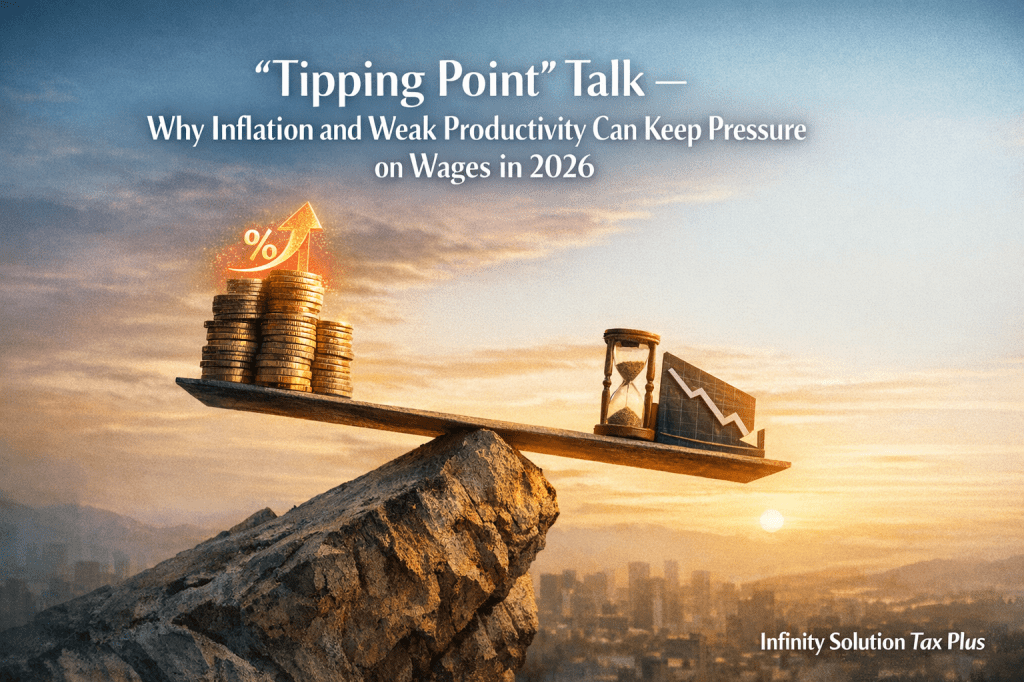
Recent commentary from major business leaders has suggested Australia may be approaching a “tipping point”, citing persistent inflation and weak productivity growth as ongoing economic challenges.
While headlines can sound dramatic, the underlying economic mechanics are more structural than sudden. When inflation remains elevated, and productivity growth is subdued, wage increases can struggle to translate into improved living standards — even when nominal pay rises occur.
For households wondering why their salary increases do not stretch as far as expected, the explanation lies in how inflation, wages, and interest rates interact. As an experienced accountant Box Hill families rely on to interpret economic shifts, we regularly translate these macro trends into practical financial planning considerations.
Inflation vs Wage Growth: What the Data Shows
The Australian Bureau of Statistics (ABS) measures inflation through the Consumer Price Index (CPI), with detailed quarterly releases available publicly.
At the same time, the ABS Wage Price Index tracks changes in wages across the economy, providing a benchmark for how quickly pay rates are increasing.
The key distinction is between nominal wage growth (the percentage increase in pay) and real wage growth (wage growth after accounting for inflation). If wages rise more slowly than CPI, real purchasing power declines — even if take-home pay is higher in dollar terms.
This is often where financial pressure becomes visible: income rises on paper, but everyday costs absorb much of the gain.
Why Productivity Matters
Productivity refers to the amount of output produced per hour worked. Over the long term, sustainable wage growth depends heavily on productivity growth.
When productivity increases:
- Businesses can generate more revenue per employee
- Higher wages can be supported without equivalent price increases
- Living standards tend to improve sustainably
However, when productivity growth is weak:
- Labour costs rise relative to output
- Profit margins face pressure
- Businesses may be less able to fund ongoing wage increases without lifting prices
This does not mean wages cannot grow, but it can limit how strong and sustainable real wage gains are over time.
The ABS regularly publishes economic updates that provide context on inflation, labour markets, and broader economic conditions.
The Role of Interest Rates
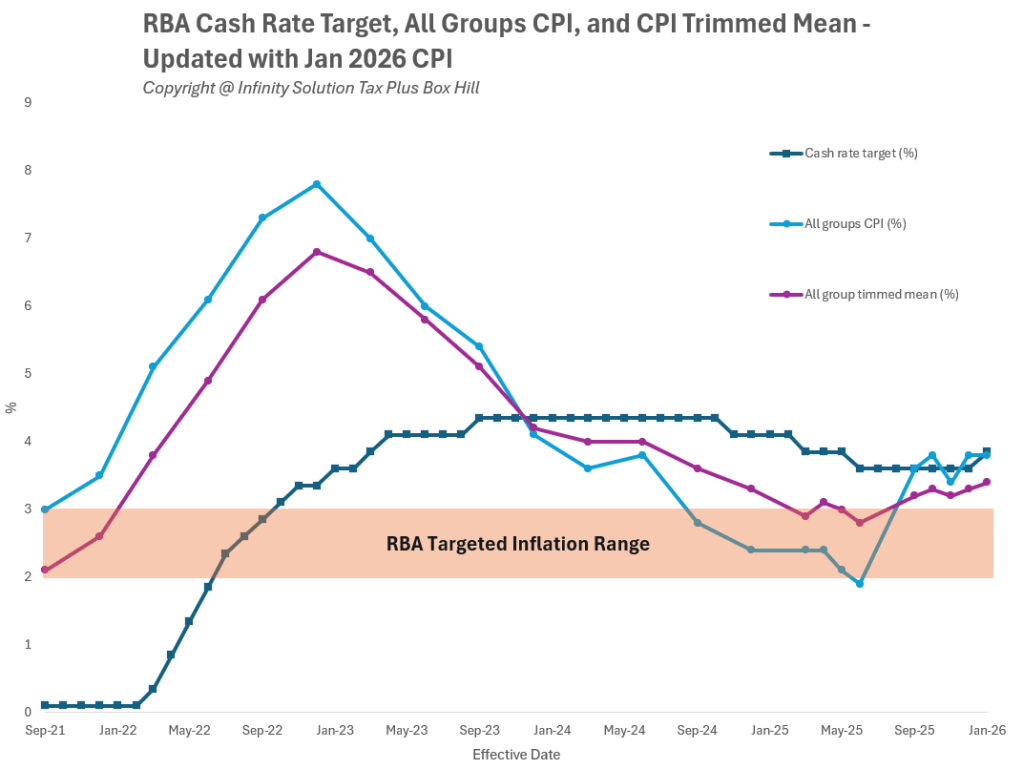
The Reserve Bank of Australia (RBA) adjusts the cash rate to manage inflation and support sustainable employment growth.
If inflation remains above the RBA’s target band, interest rates may stay elevated for longer. Higher rates reduce demand in the economy by increasing borrowing costs, which can slow spending and investment.
This creates a balancing act:
- Elevated inflation erodes real wages
- Higher interest rates can moderate inflation, but slow growth
- Weak productivity limits the pace of sustainable wage increases
The interaction of these forces shapes the economic environment that households experience
What This Means for Households
When inflation pressures coincide with weak productivity growth, households may experience:
- Slower real income growth
- Higher borrowing costs
- Greater sensitivity to discretionary spending
- Reduced capacity to build savings
In this environment, financial resilience becomes more important than reacting to short-term headlines.
Practical responses may include:
- Reviewing household cash flow annually
- Checking tax withholding and marginal tax bracket impacts
- Reassessing investment allocations
- Strengthening emergency savings buffers
A Box Hill accountant can help households evaluate how wage changes, tax brackets, superannuation contributions, and debt structures interact with broader economic conditions.
Final Thoughts
“Tipping point” language reflects genuine economic tensions, but it does not imply an immediate crisis. It highlights the importance of structural drivers — particularly inflation control and productivity growth — in shaping long-term living standards.
Monitoring ABS releases on wages and inflation will remain important in 2026, especially as they influence RBA decisions and broader policy settings.
At Infinity Solution Tax Plus, a trusted accountant in Box Hill, we help individuals and families interpret economic data in practical terms — ensuring tax planning, cash-flow management, and long-term strategies remain aligned with changing conditions.
Economic cycles are normal. Informed planning is what protects household stability through them.
Disclaimer: This article contains general information only and does not constitute financial or taxation advice. You should seek personalised advice from a registered tax or financial professional.



 Infinity Solution Tax Plus