
Australia’s Future Fund has reported another period of strong investment performance, renewing public discussion about what sovereign wealth fund returns actually mean for everyday taxpayers. While the Fund doesn’t operate like a household investment portfolio, its results matter for long-term fiscal stability, government borrowing needs, and broader policy settings. For individuals speaking with an accountant Box Hill, the key issue is separating headlines from real-world tax and superannuation impacts.
The latest ministerial update confirms the Future Fund continues to perform strongly under its current investment mandate, reinforcing its role in strengthening Australia’s balance sheet over the long term.
At the same time, elevated interest rates and tighter fiscal scrutiny mean sovereign assets are under closer examination than usual, particularly as governments navigate cost-of-living pressures and budget repair.
What the Future Fund Actually Does
The Future Fund was established to help meet the Commonwealth’s long-term liabilities, most notably public sector superannuation obligations. It is not designed to fund day-to-day government spending or replace annual tax revenue.
Key points often misunderstood include:
- Investment earnings are retained within the Fund, not distributed to households.
- Returns help reduce future pressure on the federal budget rather than generate immediate tax cuts.
- The Fund operates independently, with investment decisions insulated from short-term political cycles.
This distinction is critical when interpreting strong performance headlines. Treasury releases around the Fund often sit alongside broader fiscal commentary rather than tax policy announcements.
Does Strong Performance Affect Your Tax or Super?
Directly, no. Individual tax rates, superannuation contribution caps, and withdrawal rules are not mechanically linked to Future Fund returns.
Indirectly, however, the effects can matter:
- Strong sovereign assets support fiscal sustainability, which influences future budget decisions.
- Reducing long-term liabilities can ease pressure for future tax increases.
- Greater fiscal resilience gives the government more flexibility when responding to economic shocks.
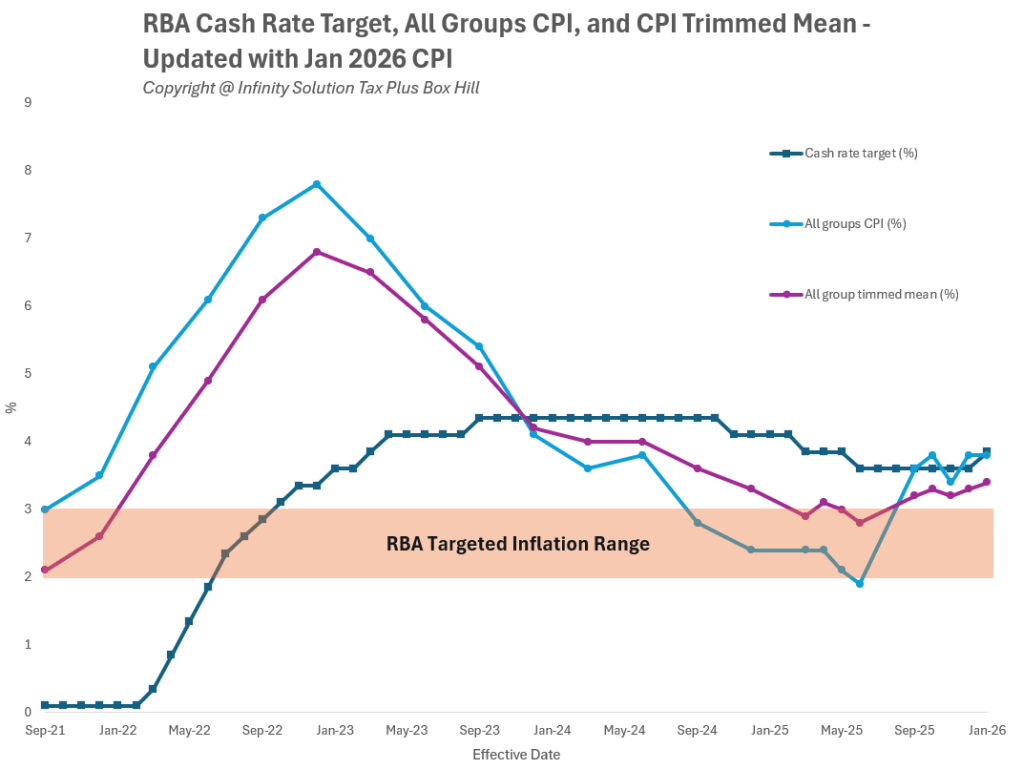
This sits within a broader macroeconomic context shaped by interest rates, inflation, and economic growth. The RBA’s February 2026 policy statement highlights why sovereign balance sheets attract more attention when monetary policy is restrictive.
Budget Narratives and Policy Expectations
Strong Future Fund returns are often referenced alongside budget capacity discussions—particularly when governments outline tax relief, spending commitments, or forward estimates. However, budget outcomes still depend on revenue collections, spending discipline, and economic conditions.
Recent federal budget fact sheets emphasise that household tax outcomes are driven by legislated tax measures, not asset fund performance.
Economic indicators released by the ABS also feed into how sustainable current fiscal settings are viewed over time, reinforcing why investment performance is only one part of a much larger picture.
Who Benefits Most From a Strong Future Fund?
The primary beneficiaries are future taxpayers, rather than current ones. By strengthening the government’s long-term position, strong returns reduce the likelihood that future generations face higher taxes or reduced services to meet legacy obligations.
For individuals and families, this reinforces the importance of personal financial planning rather than relying on macro outcomes to shape retirement or tax strategies. A Box Hill accountant can help ensure superannuation, investment, and tax decisions remain robust regardless of government balance-sheet outcomes.
Final Thoughts
Strong Future Fund performance is a positive signal for Australia’s long-term finances, but it does not translate into immediate tax changes or direct household benefits. Its real value lies in reducing future fiscal pressure and supporting economic resilience. As economic conditions evolve and policy debates continue, informed planning remains essential. For guidance grounded in current tax and economic settings, Infinity Solution Tax Plus is available as your trusted accountant in Box Hill.
Disclaimer: This article contains general information only and does not constitute financial or taxation advice. You should seek personalised advice from a registered tax or financial professional.





 Infinity Solution Tax Plus