Australia’s inflation battle is not over — and households are being told to brace for longer-lasting pressure. In recent parliamentary testimony, the Reserve Bank of Australia (RBA) warned that inflation may remain uncomfortably high until at least 2028, even as interest rates weigh on spending and borrowing decisions. For many households working with an accountant Box Hill, the message is clear: planning for higher costs needs to extend beyond the next rate cycle.
RBA Governor Michele Bullock delivered the message during a House of Representatives economics committee hearing, reinforcing that inflation persistence — not short-term volatility — is now the central concern. The warning follows the RBA’s February monetary policy decision and reflects a broader reassessment of how quickly price pressures can realistically return to target, given structural and fiscal constraints.
Why the RBA Thinks Inflation Will Stay Higher for Longer
According to the RBA, inflation pressures are no longer just about supply shocks. Several deeper forces are keeping prices elevated:
- Strong government spending, which continues to support demand even as higher rates aim to slow it
- A tight labour market, keeping wage growth elevated
- Services inflation, which is proving slower to ease than goods prices
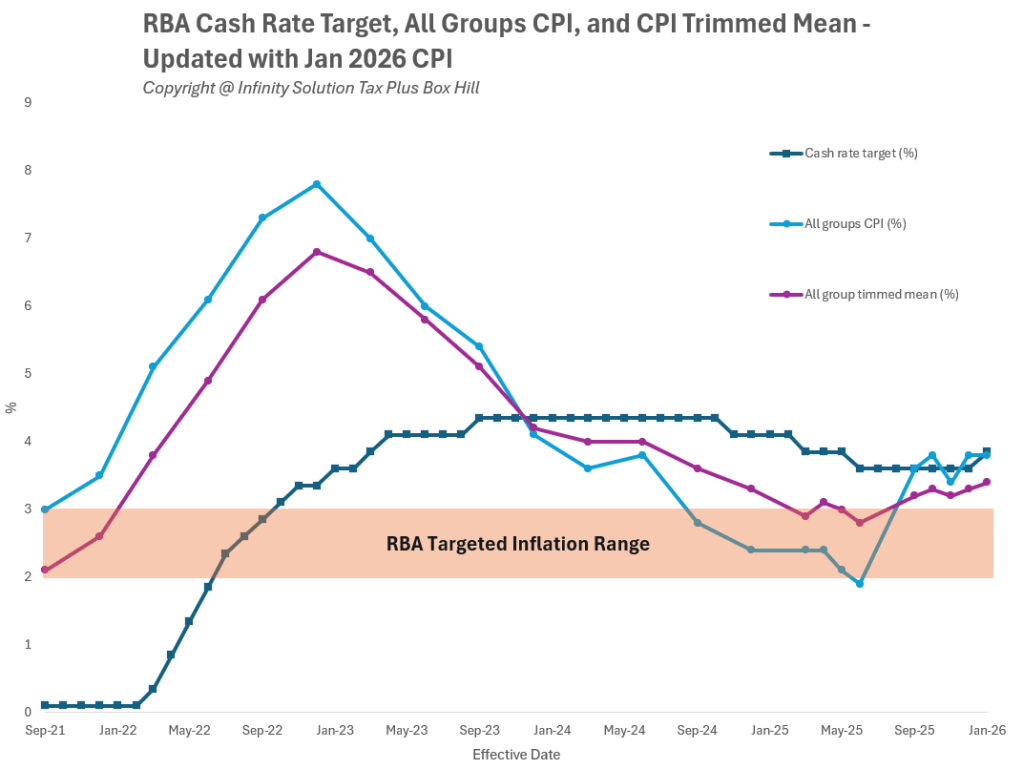
The Governor confirmed that while headline inflation has moderated, underlying inflation remains inconsistent with a quick return to the RBA’s 2–3% target band (RBA media conference, 3 Feb 2026). This explains why rate cuts are not imminent — and why households should not assume borrowing relief in the near term.
What This Means for Mortgages and Housing Costs
For mortgage holders, the implication is prolonged pressure on repayments. Even if the cash rate has peaked, the RBA is signalling that rates may stay “restrictive” for longer to ensure inflation expectations don’t re-ignite. Variable borrowers, in particular, should plan for extended tight cash flow rather than short-term relief.
Renters are also affected. Persistently high inflation, combined with population growth and supply constraints, continues to feed into rental increases. Higher interest costs for landlords also flow through to rents over time, compounding affordability challenges across the housing market.
Budgeting in a “Higher-for-Longer” Environment
This environment makes proactive financial planning essential. A Box Hill accountant can help households stress-test budgets against sustained inflation by:
- Reviewing mortgage structures and offset strategies
- Checking eligibility for tax concessions, rebates, or deductions
- Timing major expenses and income decisions more strategically
Importantly, the RBA has also acknowledged fiscal policy — such as government spending — as a contributor to inflation persistence, suggesting households should not expect quick relief from policy changes alone.
Final Thoughts: Planning Beyond the Next Rate Decision
The RBA’s warning is less about panic and more about realism. Inflation easing will be gradual, not rapid, and household finances need to be structured accordingly. Whether managing debt, rent increases, or everyday living costs, informed planning matters more than ever.
Working with a trusted accountant in Box Hill can help translate these macroeconomic signals into practical, personalised strategies — allowing households to stay resilient even as inflation remains part of the economic landscape.
Disclaimer: This article contains general information only and does not constitute financial or taxation advice. You should seek personalised advice from a registered tax or financial professional.



 Infinity Solution Tax Plus