
The Australian Bureau of Statistics (ABS) has released the Consumer Price Index (CPI) for December 2025, showing that inflation remains elevated and persistent. For households, businesses, and policymakers, this latest inflation data will be critical in shaping the cash rate in the upcoming RBA meeting. As your trusted accountant Box Hill, we unpack what the numbers mean and why they matter now.
Inflation Still Elevated – Headline and Core Measures
According to the latest ABS release:
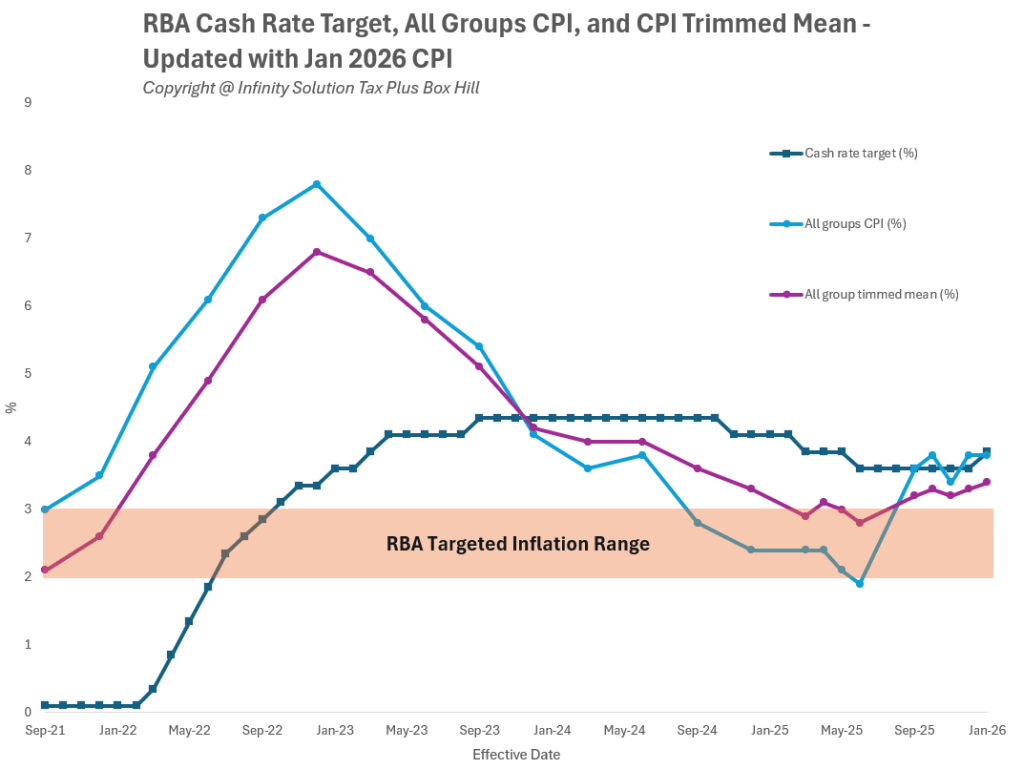
- Headline CPI (annual) rose 3.8% in the 12 months to December 2025, up from 3.4% in the 12 months to November 2025.
- Trimmed mean CPI (a key “underlying inflation” measure preferred by RBA) was 3.3% annually, also 0.1% higher than the prior reading.
- The monthly CPI for December increased by 1.0% in original terms (reflecting price changes for that month).
These results show that consumer prices, including essentials like housing, food, utilities and services, are still growing at a rate above the RBA’s target range of 2–3%.
What’s Driving Inflation?
The ABS data shows that the largest contributors to annual inflation over the past year were:
- Housing (especially rent and related costs)
- Food and non-alcoholic beverages
- Recreation and culture (which includes travel and leisure)
These categories reflect ongoing cost pressures across everyday household budgets, from rents to groceries to discretionary spending.
Implications for Monetary Policy
Because inflation remains above the RBA’s 2-3% target, many economists and market commentators now see a higher probability of an interest rate increase at the RBA’s next policy meeting in early February.
Monetary tightening typically leads to:
- Higher borrowing costs for households and businesses
- Increased mortgage repayments for new or variable-rate loans
- Greater returns on savings products
- Potential strengthening of the Australian dollar
However, the timing and extent of any rate changes depend on evolving data and the RBA assessment.
Impact on Households and Businesses
For consumers, inflation at this pace means ongoing cost-of-living pressures throughout 2026:
- Rising prices for essentials, including rent, utilities, and groceries, can reduce disposable income
- Higher input costs and wage pressures, squeezing profit margins or leading to higher prices
- Affect company valuations and increase risk for businesses with higher debt exposure
These inflation trends also affect tax planning, budgeting, and cash-flow management, areas where a professional accountant can provide guidance and support.
How We Can Help
Understanding macroeconomic data like December’s CPI release is essential for effective tax planning, cash management, and financial strategy. Working with a local Box Hill accountant early can ensure your financial decisions reflect current economic conditions and support long-term resilience.
Disclaimer: This article contains general information only and does not constitute financial or taxation advice. You should seek personalised advice from a registered tax or financial professional.





 Infinity Solution Tax Plus