The December labour force data has been released, providing fresh insights into employment trends and economic conditions. This update provides a critical input ahead of the RBA’s upcoming February policy meeting, particularly in relation to cash rate settings.
Unemployment Rate – Key Takeaways
The latest figures point to a resilient and tightening labour market:
- The unemployment rate fell in December 2025, reinforcing signs of a strengthening labour market.
- On a seasonally adjusted basis, the unemployment rate declined by 0.2 percentage points to 4.1%, reflecting a meaningful improvement over the month.
- This fall was driven by a large drop in the number of unemployed people, down 29,800 (-4.5%) in seasonally adjusted terms.
- In trend terms, the unemployment rate also decreased to 4.2% (-0.1%), indicating that underlying labour market conditions remain stable and low.
- Compared with a year earlier, the trend unemployment rate is only 0.2 percentage points higher, suggesting unemployment has remained broadly contained despite economic headwinds.
- Overall, unemployment remains historically low, consistent with a tight labour market and ongoing demand for workers.
What This Means for the Cash Rate
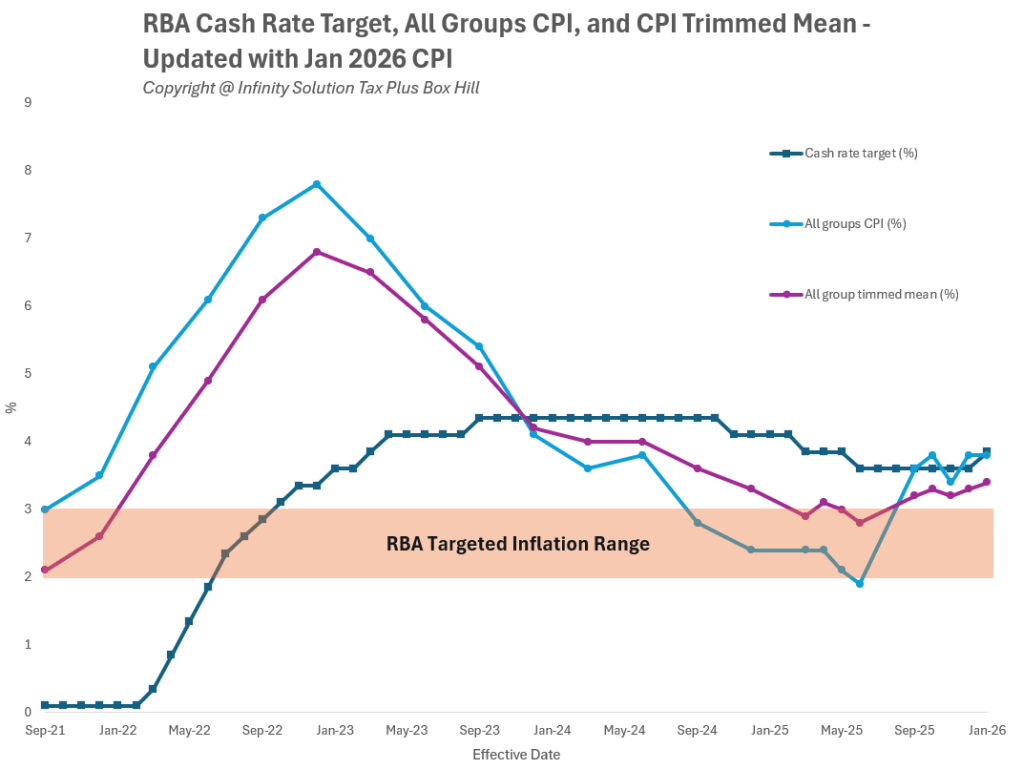
Based on the strength of the December labour force data, Infinity Solution Tax Plus concludes that the figures strongly support the RBA holding the cash rate at 4.6% at its next meeting. However, with employment conditions remaining tight, the possibility of a future rate hike remains on the table should inflationary pressures persist. The next reading of the CPI will be critical.
How This Impacts You
Shifts in interest rate expectations and economic conditions can have direct implications for both personal and business financial planning. If you need guidance on navigating tax obligations or structuring your finances in a changing economic environment, speak with Infinity Solution Tax Solution, your trusted Box Hill accountant, for proactive and tailored support.
Disclaimer: This article contains general information only and does not constitute financial or taxation advice. You should seek personalised advice from a registered tax or financial professional.




 Infinity Solution Tax Plus